Tag Archives: management

Playing with numbers

I am often mindful of the need to criticize the quality of leadership and management in health and social care services; particularly the obsession with numbers, the tick-box mentality, and the blind faith placed in targets for driving change and daily practice across services. I am surely not a lone voice in this critique, but is it valid or just a reaction against the sound of the pips squeaking?

I do believe that an absence of targets or defined outcomes, and a failure to establish high standards for provision of services only leads to inconsistencies between practitioners and teams… what is often referred to as a postcode lottery. Service users don’t deserve to be on the receiving end of either stressed out practitioners fearful of constant criticism, or laid-back practitioners doing their own thing. Audit and regulation have a place, but surely they need to be clearly joined up to practice, not existing in a vacuum somewhat disconnected from the realities within which good practice has to operate.

The ever-growing chasm between person-centred practice and business-focused managerialism does little to promote a culture of organizational collaboration that may encourage a more engaging form of audit and regulation across services. My solution would be to eliminate most of the current audit requirements imposed on practitioners and teams, particularly that which they experience as wholly time-consuming and unhelpful. So far so good, say the practitioners amongst you; please do share your thoughts, but read on before you do…

Over the last 12 years, through the Practice Based Evidence initiative, I have been developing tools designed specifically for use by practitioners and teams. These tools have flexible uses: personal reflection, individual supervision, team development and team evaluation. Used diligently they should be able to provide a host of qualitative and quantitative data, which in turn should offer useful feedback to practitioners and teams for practice development purposes.
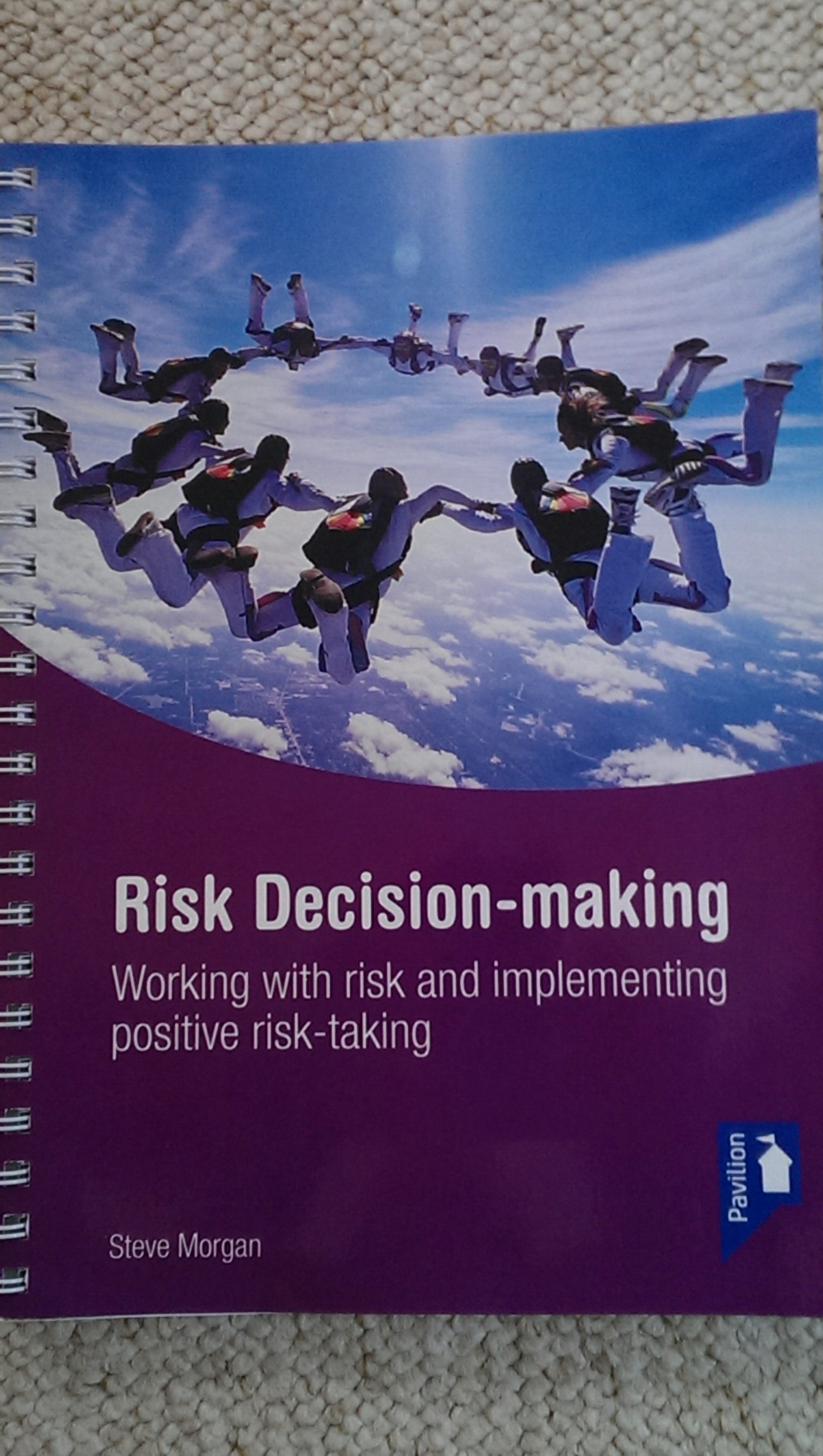
Updated Risk Resource (2013)

The Risk Decision-Making publication includes examples of these tools, and a specific example of data emerging from their use in a specific organization to help identify good practice and priorities for further development.

So, the sting in this tail is that practitioners and teams need to own the processes of audit and regulation if they are to reflect and develop good practice. For those auditors and managers fearful of losing their jobs if Practice Based Evidence emerged as the norm, you could always make use of the data to tick your boxes; better still, you could prioritise your time more effectively by getting in and alongside practitioners and teams to support a quality revolution. You might then be in a stronger position to challenge and inform the thinking of the inter-galactic warlords from distant planets a.k.a. commissioners, Department of Health, Care Quality Commission.

Podcast Episode 050: Who is management for?

TheStrengthsRevolution_albumart_2-2It can be argued that over several decades the function of management has morphed from the role of supporting the essential development of a business into a role of managers running the business for their own primary gain.

Recognised management academic gurus have identified the dangers of management for management sake, and the way it can block the functioning of the frontline workers. This has been my experience throughout many structured interviews with frontline clinicians in health and social care services in the UK. Managers need to reconnect with the primary business of its business. The excellent managers contribute significantly to developing staff to identify and make best use of their strengths. Good management is a talent in its own right, but the majority of what constitutes management can frustrate and block creativity, and largely ignore the vital strengths.

To hear the full content of this episode click on the links to iTunes and Sound Cloud (or go to Stitcher Radio):

https://itunes.apple.com/gb/podcast/strengths-revolution-steve/id867043694

https://itunes.apple.com/gb/podcast/050-who-is-management-for/id867043694?i=337535026&mt=2

“Most of what we call management consists in making it difficult for people to get their work done.” [Peter F Drucker].

“There is nothing so useless as that doing efficiently that which does not need doing at all.” [Peter F Drucker].

Podcast Episode 049: Anne Clilverd Interview ~ Team-Working

TheStrengthsRevolution_albumart_2-2An interview with Anne Clilverd as she reflects back on three specific teams to identify what elements contribute to good team-working.

An acute admissions ward where, despite being based on a hierarchy, a strong sense of belonging was fostered. The environment was supportive through all staff being encouraged to contribute their observations in a way that was respected by multidisciplinary colleagues.

Compass as a walk-in advice and mental health centre also offering a degree of outreach work as a new initiative at a time when long-stay hospitals were beginning to be closed down. This initiative was joint funded and managed by health and social care, operating as a small multidisciplinary team of four people committed to a strong set of values and principles. As a group the workers need to feel confident to have their ideas openly and constructively critiqued; and they were supported by an advisory group that included several service users and representatives of local voluntary sector services.

As team manager Anne worked in the Kings cross Community Mental Health Team. This type of team functions as a group of individuals who come together for a common purpose, but belonging may be more to the team name than a sense of full collective working. The team manager carries the specific responsibility to stamp a personality on the team through a vision for common goals and purpose, and the quality of supervision as a means for encouraging reflection and professional/personal development.

Anne also briefly reflects on the optimal size of good functioning teams. For the full content of this episode click on the links to iTunes and Sound Cloud (or go to Stitcher Radio):

https://itunes.apple.com/gb/podcast/strengths-revolution-steve/id867043694

https://itunes.apple.com/gb/podcast/049-anne-clilverd-interview/id867043694?i=337032545&mt=2

Podcast Episode 048: Team Strengths Assessment

TheStrengthsRevolution_albumart_2-2We all work in teams from time-to-time but how much do we really focus on identifying and developing the individual talents of the workers, and the overall strengths of good team-working?

A team is a group of people coming together for a common purpose or goal, and often it is the challenges and difficulties that define the work of the team that will most influence its outlook in terms of development. All too often teams and services look on training and developing the areas of weakness, to the detriment of boosting and exploiting areas of success into areas of excellence.

In this episode I outline my categorisation of teams in relation to the degree in which they relate to, identify, and work with strengths, and the Team Strengths Assessment tool that I developed in the early 2000’s to support this area of practice development. Examples of three types of mental health teams are referred to as examples where these tools have been used.

To access the full content of this episode click on the links to iTunes and Sound Cloud (or go to Stitcher Radio):

https://itunes.apple.com/gb/podcast/strengths-revolution-steve/id867043694

https://itunes.apple.com/gb/podcast/048-team-strengths-assessment/id867043694?i=336480841&mt=2

“Never doubt that a small group of thoughtful, committed people can change the world. Indeed, it is the only thing that ever has.” [Margaret Mead].


Podcast Episode 047: Anne Clilverd Interview ~ Narrative Therapy

TheStrengthsRevolution_albumart_2-2This episode is the first part of an interview with Anne Clilverd, formerly Team Manager of the Kings Cross Community Mental Health Team in London. In this discussion Anne reflects on where she first became aware of Narrative Therapy, how she followed through the specific training faciltated by Michael White, and some of the challenges of embedding it into her primary work role in a community service.

The concept of the ‘outsider witness’ as a distinct function within Narrative Therapy is explored in relation to the therapeutic role offered with clients. Specific reference is made to use of the therapeutic approach in locally designed ‘Mental Health Matters’ workshops, where a client, carer and practitioner are able to work together in supporting people to tell and analyse their own story. The role of family and cultural values are able to be honoured as an element that can emerge through a workshop style of approach to embedding the ideas of Narrative Therapy.

The approach can also be shared and adapted through staff supervision with practitioners open and interested in developing the ideas into their practice, and for exploring how they are functioning in the practitioner role.

For the full content of this episode click on the links to iTunes and Sound Cloud (or go to Stitcher Radio):

https://itunes.apple.com/gb/podcast/strengths-revolution-steve/id867043694

https://itunes.apple.com/gb/podcast/047-anne-clilverd-interview/id867043694?i=335937142&mt=2

Podcast Episode 046: Valuing Narrative

TheStrengthsRevolution_albumart_2-2The term narrative is important for many reasons; it is the means by which we recount our lives, the events, emotions and experiences that make up the patchwork of our existence. It is the core of each interpersonal relationship, and it has become a continual theme throughout my working career. The fundamental basis of mental health care is the trust and confidence built through the power of working relationships, enabling people to tell their stories.

Documenting our work also presents a conflict between the dominance of bureaucratic tick-box approaches and the need to represent someone through a narrative of their lives. Then there is narrative therapy as a psychotherapeutic approach to talking treatments. This episode concludes by outlining two of the core components of narrative therapy, before the next episode which will take the form of an interview with a friend and colleague who has trained in narrative therapy.

For the full content of this episode click on the links to iTunes and Sound Cloud (or go to Stitcher Radio):

https://itunes.apple.com/gb/podcast/strengths-revolution-steve/id867043694

https://itunes.apple.com/gb/podcast/046-valuing-narrative/id867043694?i=335428751&mt=2

“We construct a narrative for ourselves, and that’s the thread we follow from one day to the next. People who disintegrate as personalities are the ones who lose that thread.” [Paul Benjamin].

Do what you say on your tin

Canadian Falls 3Are you taking the risk? It is something we all do, but why do we confuse and complicate it by our lackadaisical use of language? We take risks in order to gain something for ourselves, and occasionally others. We weigh up the options available to us, and make a decision based on what we compute to be the most beneficial course of action. It is called positive risk-taking not because we are trying to find a ‘positive risk’ (whatever that is), but because we are taking the risk in order to achieve a positive outcome (the gain or benefit). So, the word positive is about the outcome not about the risk! I am also not talking about ‘positive risk management’, which sounds too general and like unnecessary window-dressing of a process more often seen as negative or risk-averse. The word positive is being added to risk-taking, in my context, in order to bring some clarity and specific detail to your thinking.

We revere risk-takers in the worlds of sport, entertainment and business, tending to attribute degrees of awe to their decision-making and achievements. Do you think Ayrton Senna planned his route, speed and overtaking manoeuvres around the race-track because he thought the risk would be nice? Does Warren Buffett make his financial decisions based on a spin of his favourite coin? It is more than likely that both of these people employed complex ways of weighing up the pros and cons of choices facing them, sometimes with careful thought and consideration, and sometimes distilling a lifetime of experience into a split second. So do we, in our own personal circumstances.

Risk Decision-MakingSo, next time you are leaning on a bar deciding whether to have that extra Babycham, remember that positive risk-taking is weighing up the pros and cons of your particular set of circumstances at that time. Whereas the positive risk is simply the chance that they might taste better the more you have; and the positive risk management is the hope that those around you will help you home instead of tying you to a lamp-post at the end of the night. These concepts mean different things, so be clear when you use language, only positive risk-taking is thoughtful and considered. But… what do you think?

http://www.pavpub.com/risk-decision-making/

“Words are how people think. When you misuse words, you diminish your ability to think clearly and truthfully.” [Margaret Heffernan].

Podcast Episode 044: Suicide Risk Factors

TheStrengthsRevolution_albumart_2-2In this episode I maintain a focus on suicide risk by reviewing risk factors and the importance of counter-balancing these with a focus on protective factors and strengths.

A specific program in Detroit has generated debate and pilot sites in the UK to develop a zero tolerance to suicide risk, and while aiming for zero suicides is an excellent ideal, it raises several important questions. Firstly, some people have made a clear and final decision to take their own lives for their own complex and personal reasons, so how will choice be respected within a zero tolerance approach? Will services be recognised for reductions in suicide rates or will the blame culture still focus on the diminishing few completed cases? Should any practitioners or advocates seriously question the ethos and intentions behind a zero tolerance approach?

Suicide risk factors from the known research are outlined, and the more personalised reflection of protective factors are highlighted. The emphasis on assessing and working with suicide risk is placed on the quality information through narrative approaches, not the more frequent bureaucratic requirement for ticking boxes.

For the full content of this episode click on the links for iTunes and Sound Cloud (or go to Stitcher Radio):

https://itunes.apple.com/gb/podcast/strengths-revolution-steve/id867043694

https://itunes.apple.com/gb/podcast/044-suicide-risk-factors/id867043694?i=334338377&mt=2

“Suicide is a permanent solution to a temporary problem.” [Phil Donahue].

Values-Based Practice

TheStrengthsRevolution_albumart_1In 2013 Oxleas NHS Foundation Trust, in south-east London, commissioned a piece of work from Practice Based Evidence and the Mental Health Foundation to explore ways in which ‘values-based practice’ can be practiced and evidenced more in the day-to-day work with service users and carers within the Adult Mental Health Directorate. So far, the programme has engaged with six pilot teams and produced a set of draft guidelines. In 2014 the programme explore innovative ways of implementing the ideas, and spreading ideas to staff in other directorates.

Now in 2015 the programme draws to a close with a focus on a specific group of people, explored elsewhere in a few podcast episodes, the team and ward managers. These are seen by the programme developers as the key people for embodying and promoting the culture change needed within teams in order to implement refined approaches to the day-to-day challenges of working with peoples strengths and focusing on person-centred values in practice rather than just words in policies and mission statements.

WHY FOCUS ON VALUES-BASED PRACTICE?

They influence everything we think, decide and do in day-to-day practice, though often in a more sub-conscious way rather than overt statements and discussions. Good practice is not about adhering to one set of right values, we should respect and embrace values diversity. Values can be very personal, professional or organisational statements, but the focus here is on the values that underpin the day-to-day language of focusing on the needs and priorities of the individual service user. Practitioners need to be supported to be able to work where values of the service user, organisation, or professional may differ or conflict.  A recent high profile report in the UK highlights the need to put this approach to values-based practice into context:

Francis Report into Stafford Hospital “People must always come before numbers. Individual patients and their treatment are what really matters. Statistics, benchmarks and action plans are tools not ends in themselves. They should not come before patients and their experiences. This is what must be remembered by all those who design and implement policy for the NHS.” Excerpt from press release statement by Robert Francis QC in Stafford (5/2/13).

One product of the overall programme has been the development of brief practical guidelines linking together values and principles, working with strengths, positive risk-taking, and the role of person-centred care planning. A modified version of these can be accessed on request through The Strengths Revolution blog.

Podcast Episode 043: Suicide Risk [2]

IMAG1511What role does positive risk-taking have to play when someone is experiencing and expressing serious suicidal thoughts? Firstly, we have a duty to take such expressions very seriously, but the language of suicide risk can often appear overwhelming to others, and generate great fears of what might be.

Do we respond in a way that manages the other person, manages the situation, and ultimately takes over through assuming control over and for the person? Do we really take that step backwards, and give ourselves whatever time is available to listen to the person and help them explore their options in a supported relationship? We cannot eliminate risk, but do we become overwhelmed by a fear of engaging in the real conversation?

There is no such thing as a risk-free option, and in this episode I outline a case example from my own practice that illustrates how positive risk-taking was put in place through listening and acting on what the individual has to say, identifying alternatives, and exploring strengths and potential protective factors alongside the serious expression of risk.

For the full content of this episode click on the links for iTunes and Sound Cloud (or go to Stitcher Radio):

https://itunes.apple.com/gb/podcast/strengths-revolution-steve/id867043694

https://itunes.apple.com/gb/podcast/043-suicide-risk-2/id867043694?i=333467695&mt=2

“If it wasn’t for the possibility of suicide I would have killed myself a long time ago.” [Unknown source].