In this interview Anne Clilverd talks about the important therapeutic value that pets provide for their owners and for others. They offer a remarkable range of functions that can help people across all age groups. She also talks briefly about her work with the Pets as Therapy charity.
For the full content of this episode click on the links to iTunes and Sound Cloud (or go to Stitcher Radio):
We shouldn’t be happy just being critics; do so with constructive responses, so you are always being helpful in your role of criticising others. I have been a critic of the management culture in general in recent episodes of this show, but also need to stand up and be counted in my response alongside my criticism.
I have chosen a process of transformation of my own recent work, particularly positive risk-taking and risk decision-making, to align it more with the needs of more senior managers and business leaders. These are people who are continually making high risk decisions, but in my experience in health and social care they commission me to work with their practitioners and teams, but don’t take part in any of the work. It is my intention to refocus my work through the EPIC Program of online marketing and coaching, into a transformation statement directed to my new ideal client avatar through a new webinar that can lead some people through strategy sessions into my signature programme.
It is my intention to offer a high degree of transformation for senior people experiencing difficulties or fears in relation to their decision-making. Michelle Mone is a lingerie tycoon who has recently publicly spoken about her daily fears about these decisions, despite being a very successful entrepreneur, so Michelle helps me to identify the type of people I would ideally want to be working with.
Steve realised he misread the idea of a Google Hangout when nobody turned up to the venue he booked!
For the full content of this episode click on the links to iTunes and Sound Cloud (or go to Stitcher Radio):
In this episode a couple of recent newspaper articles reflect on the malaise of the management culture in two UK world class institutions… the NHS and BBC.
Damning reports into the culture of management in the NHS are being withheld until after the imminent general election, where the description of the sturcture is described as ‘totally shocking’ and ‘not fit for purpose’. Could this be the very structure that was re-structured against previous manifesto promises by the Tory led government initiative?
Meanwhile, over at the BBC it would appear that investigative journalists who blow the whistle on previous BBC celebs for child abuse scandals, are themselves demoted and sidelined, while the bullies are promoted! Great institutions are created from lofty principles and values, but it would appear that by a process of evolution the management function gradually grows into a misguided sense of its own self-importance.
Bureaucracy becomes top heavy, unmanageable, and filled with overpaid people who have little understanding or connection with the true heart of the enterprise. There is no simple solution to a malignacy decades in the incubation; but we must continue to respect our world class institutions for their founding principles and uphold their core values as theur main purpose.
For the full content of this episode click on the links to iTunes and Sound Cloud (or go to Stitcher Radio):
It can be argued that over several decades the function of management has morphed from the role of supporting the essential development of a business into a role of managers running the business for their own primary gain.
Recognised management academic gurus have identified the dangers of management for management sake, and the way it can block the functioning of the frontline workers. This has been my experience throughout many structured interviews with frontline clinicians in health and social care services in the UK. Managers need to reconnect with the primary business of its business. The excellent managers contribute significantly to developing staff to identify and make best use of their strengths. Good management is a talent in its own right, but the majority of what constitutes management can frustrate and block creativity, and largely ignore the vital strengths.
To hear the full content of this episode click on the links to iTunes and Sound Cloud (or go to Stitcher Radio):
We all work in teams from time-to-time but how much do we really focus on identifying and developing the individual talents of the workers, and the overall strengths of good team-working?
A team is a group of people coming together for a common purpose or goal, and often it is the challenges and difficulties that define the work of the team that will most influence its outlook in terms of development. All too often teams and services look on training and developing the areas of weakness, to the detriment of boosting and exploiting areas of success into areas of excellence.
In this episode I outline my categorisation of teams in relation to the degree in which they relate to, identify, and work with strengths, and the Team Strengths Assessment tool that I developed in the early 2000’s to support this area of practice development. Examples of three types of mental health teams are referred to as examples where these tools have been used.
To access the full content of this episode click on the links to iTunes and Sound Cloud (or go to Stitcher Radio):
Steve Morgan in conversation with Kirt Hunte about what contributes to good team-working. We frequently make a claim to be a team but function more as a group of individuals.
What influence does the team manager or team leader have on the identity and function of the team? Can a talented group of individuals simply come together as a great team? Does the size of the team have any affect on its ability to function as a team?
The creativity and risk-taking required for developing a new initiative is very different from the long term sustainability of an established team or service. Kirt and Steve reflect on football teams and mental health teams through their observations and experiences over many years. Reference is also made to the book entitled ‘Organizing Genius’ by Warren Bennis and Patricia Biederman describing and analysing seven case studies of great teams.
For the full content of this episode click on the links to iTunes and Sound Cloud (or go to Stitcher Radio):
What makes a great team? A great leader? Talented individuals? A clear purpose? All of the above and more. This episode helps to define what we mean by ‘team’, as most of us function within a range of different types of teams… sports, management, service provision or focused task or product, all require good team-working. However, teamwork is often easier to talk about than to deliver.
In this episode Steve Morgan focuses on an influential book on his team development work, written by Warren Bennis and Patricia Biederman ‘Organising Genius: The Secrets of Creative Collaboration’. A combination of great leadership and talented individuals are required, but the great groups studied in this seminal publication help to identify fifteen components of what contribute to the development of ‘great groups’. In connection with previous episodes, it is also important to recognise that interfering bureaucracy is entirely absent from the works of the historic great groups!
For the full content of this episode click on the links to iTunes and Sound Cloud (or go to Stitcher Radio):
As western industrialised societies have drifted into a post-industrial service industries world, one thing proliferates more than the most infectious of diseases… bureaucracy! Now anything to do with paper, or its electronic offspring, reigns supreme. Managing, auditing and regulating have become effective barriers to creativity and innovation.
The new mantra is standardisation, systematisation, uniformity and safety… conformity ensures mediocrity will be the outer limits of permitted imagination. Do the children of today dream and aspire to become a bureaucrat when they grow up? Do they loose sleep over the excitement of their first suit and form to fill? Take with a large degree of caution any bureaucrat promising to reduce the plethora of bureaucracy. It is not in their interests to free up other people to exercise their talents, initiative and decision-making skills.
To access the full content of this episode click on the links to iTunes and Sound Cloud (or go to Stitcher Radio):
When should we be starting to build up a Strengths Assessment, including within health and social care services? The answer is ‘immediately’, it should be a natural default position to how we connect with people and think about who they really are.
Searching for and using peoples strengths should be equally relevant when someone is acutely unwell or going through a period of crisis. It is not something that we just set aside a one-off time slot to complete; it is an on-going fluid conversation. The picture has to emerge over time if we are to have faith in it as an accurate positive picture of personal resources.
It requires a different mindset of practitioners working with clients/patients/service users. Medical approaches focus on the issue of identifying the diagnosis, as a descriptor of problems. It requires degrees of self-disclosure in order to engage a stronger therapeutic relationship.
Paperwork has a place for prompting and capturing the detail; but bureaucracy has no place in a picture of positive practice. We are ultimately helping people to build a positive picture of themselves, and of the resources they can personally apply to exert more control over their own experiences.
For the full episode of this podcast click on the following iTunes links (or go to Sound Cloud or Stitcher Radio):

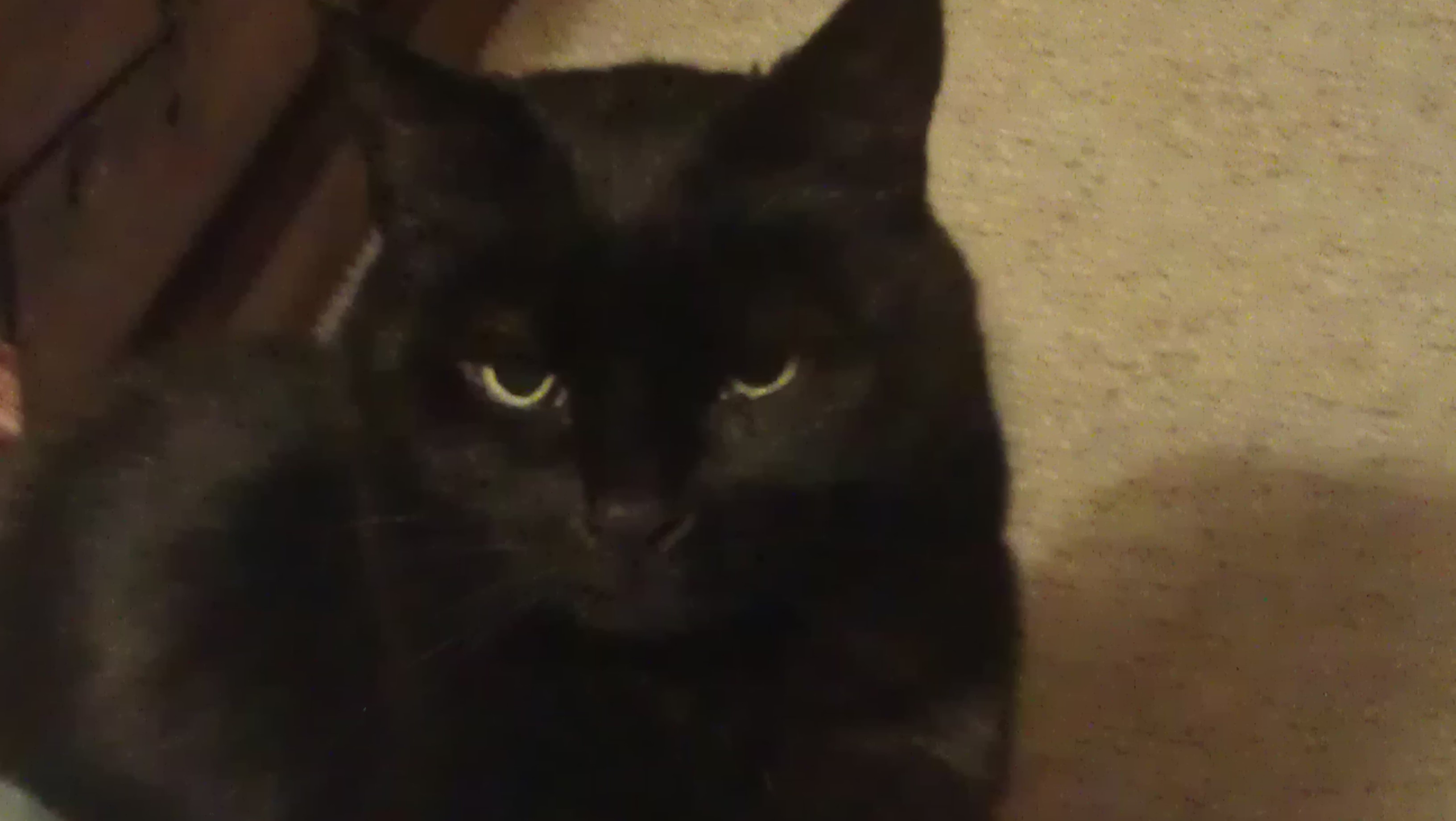 In this interview Anne Clilverd talks about the important therapeutic value that pets provide for their owners and for others. They offer a remarkable range of functions that can help people across all age groups. She also talks briefly about her work with the Pets as Therapy charity.

 The Strengths Revolution