Category Archives: Working with Risk

Reasons to be cheerful…

Jazz guys on Frenchman Street [2]

In this video I share a wide range of quotes that reflect different aspects of risk-taking. Indeed, I would suggest they help us to understand and reflect on the whole rationale that underpins why we should be taking calculated risks.

Use the following link to also access a free training webinar which introduces my simple 5-step process to risk decision-making, which also form the core modules of the Positive Risk-Taking Membership Site:

https://app.webinarjam.net/register/21360/99e6026a97


Collaborative risk decisions

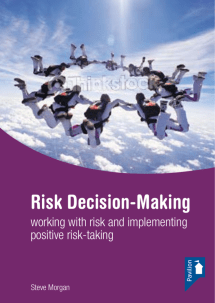
Risk Decision-Making

Risk decisions are frequently challenging situations to us individually. A risk averse stance can be expected, not least out of the thoughts for self preservation. Collaborative decision-making provides the foundation for increased information, collective reflection, and confidence through shared accountability.

Use the following link to also access a free training webinar which introduces my simple 5-step process to risk decision-making, which also form the core modules of the Positive Risk-Taking Membership Site:

https://app.webinarjam.net/register/21360/99e6026a97


Introducing a Strengths & Risk Relationship

Working-with-Strengths

Risk assessment is inherently negative in the information it provides, naturally driving us to be more restrictive or risk averse. It is strengths information that will provide the basis for confidence in order to move forward in taking appropriate risks.

Use the following link to also access a free training webinar which introduces my simple 5-step process to risk decision-making, which also form the core modules of the Positive Risk-Taking Membership Site:

https://app.webinarjam.net/register/21360/99e6026a97

Risk: the bureaucracy v practice conundrum

WWR 2007
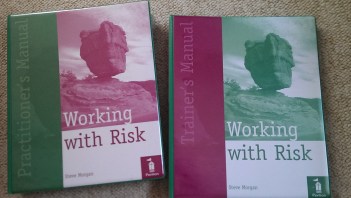
Working with Risk (2007)

Reflecting on questions regarding the purpose and design of risk paperwork, and the role of evidence in its construction.

Use the following link to also access a free training webinar which introduces my simple 5-step process to risk decision-making, which also form the core modules of the Positive Risk-Taking Membership Site:

https://app.webinarjam.net/register/21360/99e6026a97

A Focus on Risk Training

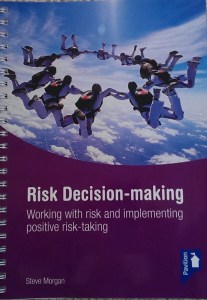
Risk Decision-Making    Working with risk and making risk decisions is an essential part of the work of any practitioner in health and social care settings. But, is our risk training really fit for purpose in many organisations? The following short video sets out the case for a training strategy focused more on teams, in order to be a more effective use of time and resources.
 

Use the following link to also access a free training webinar which introduces my simple 5-step process to risk decision-making, which also form the core modules of the Positive Risk-Taking Membership Site:

https://app.webinarjam.net/register/21360/99e6026a97


Risk Aversion or Risk-Taking?

Positive Risk-Taking logo

We all work with risk; we all have to make risk decisions, and sometimes those decisions involve the challenge of taking risks. Part of overcoming the challenges resides in our awareness of our own mindset in relation to risk. I have a simple 5-step approach to helping me make the challenging decisions… in work as well as in life.

Click on the following link to access a free webinar that provides 40+ minutes of training in the challenges risk can present, and an introduction to my 5-step approach:

https://app.webinarjam.net/register/21360/99e6026a97

This webinar condenses 30+ years of my experience working in and alongside health and social care services, and 60+ publications around the subject. Risk is something we should embrace from a positive perspective, and this webinar develops this mindset.

Positive Risk-Taking & Dementia-Friendly Communities

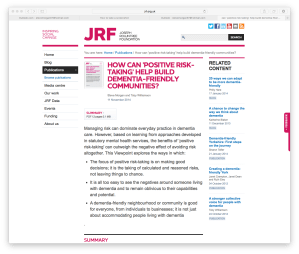
JRF screenshotThe increasing incidence of dementia, and profile it is gaining in the public imagination, means that this is a condition that none of us can ignore. What role might a strengths approach have to play in the way we view people living with dementia? It is all too easy to see the negatives and deficits around someone living with dementia, and to remain oblivious to their capabilities and potential, as well as the supportive resources they have around them. Just because you have a particular label doesn’t mean you have lost all capacity to dream and desire a reasonable quality of life for yourself, as determined by you, not imposed on you by others. However, the so-called ‘community’ can become a progressively challenging place as cognitive capabilities decline.
‘Positive risk-taking’ is a concept well established by the Practice Based Evidence consultancy, and it applies equally to the risks a person living with dementia may wish to take, and to all of us who live in, work in and develop communities. The Joseph Rowntree Foundation commissioned a piece of work from a collaboration of Practice Based Evidence and the Mental Health Foundation to investigate how the concept of positive risk-taking may apply to the government initiative of developing dementia-friendly communities. The think piece is explored in the published ‘Viewpoint’ at the following link:

http://www.jrf.org.uk/publications/how-can-positive-risk-taking-help-build-dementia-friendly-communities

“Those with dementia are still people and they still have stories and they still have character and they’re all individuals and they’re all unique. And they just need to be interacted with on a human level.” [Carey Mulligan].

Check out ‘Still Alice’ as a great portrayal of the tragic descent into dementia, and the impact on a wider family as well as the person living with the condition.


Risk and Leadership

Updated Risk Resource (2013)

What role does leadership play in good practice regarding how we work with risk? Leadership is often lacking, and management is all too often to the fore where considerations of risk are concerned in health and social care agencies. In this scenario fear and back-covering hold the attention, while good practice is presented as an unconvincing façade. Managers strangely play down any questions about excessive bureaucracy while still demanding all the paperwork is completed as the primary target. If something goes wrong it is the paperwork that gets sole attention, and real practice considerations are relegated to a place somewhere to the right of obscurity.

‘Good paperwork is a sign of good practice’ becomes the convenient smokescreen. This would be true if there was less management and more supportive leadership, as the need for paperwork would be put into perspective: as the essential minimum to support good practice not to hinder it. Good tools are a range of checklists and formats that have been shaped by good practice, and thus they are able to guide and prompt firstly, and capture good practice as a secondary function.

The Risk Decision-Making publication is the update of 17 years of working with individual practitioners and teams across countless organisations, both from within the Sainsbury Centre for Mental Health initially and through the Practice Based Evidence consultancy since 2001. The tools and guidance are informed by what we know from the national and international research, but more significantly through the practice based evidence of hundreds of practitioners across all disciplines and service sectors. Most importantly, this publication refocuses the attention on risk as everyone’s business; so it is structured throughout to address issues from the perspective of individual’s, teams and the leadership & management of organisations. Whatever systems your leaders have bought or put into place there is still a role for guidance on best practice, so look no further.

Podcast Episode 044: Suicide Risk Factors

TheStrengthsRevolution_albumart_2-2In this episode I maintain a focus on suicide risk by reviewing risk factors and the importance of counter-balancing these with a focus on protective factors and strengths.

A specific program in Detroit has generated debate and pilot sites in the UK to develop a zero tolerance to suicide risk, and while aiming for zero suicides is an excellent ideal, it raises several important questions. Firstly, some people have made a clear and final decision to take their own lives for their own complex and personal reasons, so how will choice be respected within a zero tolerance approach? Will services be recognised for reductions in suicide rates or will the blame culture still focus on the diminishing few completed cases? Should any practitioners or advocates seriously question the ethos and intentions behind a zero tolerance approach?

Suicide risk factors from the known research are outlined, and the more personalised reflection of protective factors are highlighted. The emphasis on assessing and working with suicide risk is placed on the quality information through narrative approaches, not the more frequent bureaucratic requirement for ticking boxes.

For the full content of this episode click on the links for iTunes and Sound Cloud (or go to Stitcher Radio):

https://itunes.apple.com/gb/podcast/strengths-revolution-steve/id867043694

https://itunes.apple.com/gb/podcast/044-suicide-risk-factors/id867043694?i=334338377&mt=2

“Suicide is a permanent solution to a temporary problem.” [Phil Donahue].

Podcast Episode 043: Suicide Risk [2]

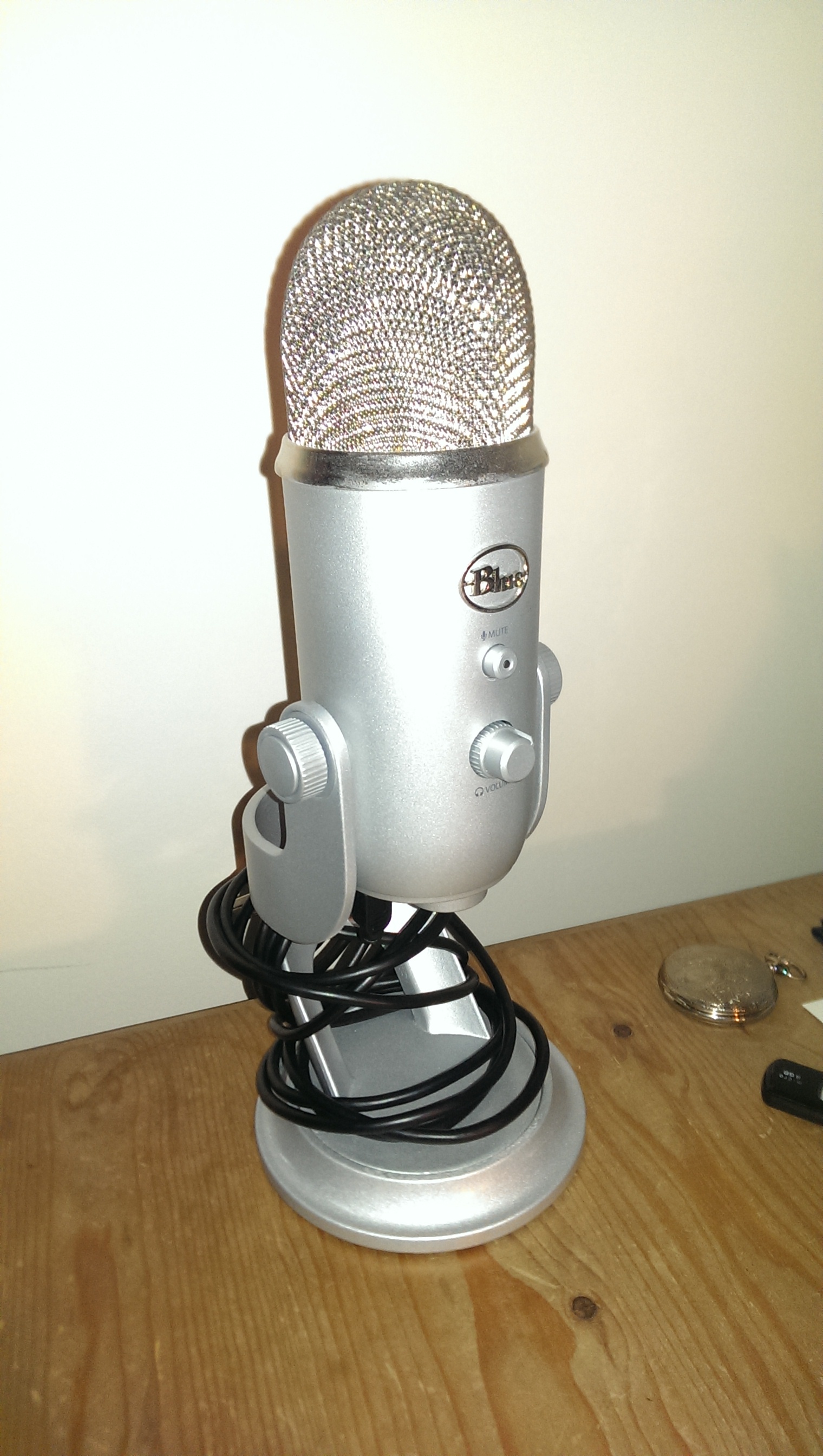
IMAG1511What role does positive risk-taking have to play when someone is experiencing and expressing serious suicidal thoughts? Firstly, we have a duty to take such expressions very seriously, but the language of suicide risk can often appear overwhelming to others, and generate great fears of what might be.

Do we respond in a way that manages the other person, manages the situation, and ultimately takes over through assuming control over and for the person? Do we really take that step backwards, and give ourselves whatever time is available to listen to the person and help them explore their options in a supported relationship? We cannot eliminate risk, but do we become overwhelmed by a fear of engaging in the real conversation?

There is no such thing as a risk-free option, and in this episode I outline a case example from my own practice that illustrates how positive risk-taking was put in place through listening and acting on what the individual has to say, identifying alternatives, and exploring strengths and potential protective factors alongside the serious expression of risk.

For the full content of this episode click on the links for iTunes and Sound Cloud (or go to Stitcher Radio):

https://itunes.apple.com/gb/podcast/strengths-revolution-steve/id867043694

https://itunes.apple.com/gb/podcast/043-suicide-risk-2/id867043694?i=333467695&mt=2

“If it wasn’t for the possibility of suicide I would have killed myself a long time ago.” [Unknown source].