
Tag Archives: Strengths

Podcast Episode 069: Strengths-Based Reviews

TheStrengthsRevolution_albumart_2-2Whether it is the occasional personal reflection or the more structured process in service delivery, we all review our progress from time to time. The purpose is to check in on the progress of our plans and actions towards the achievement of our priorities and goals, and just occasionally to check how we are managing lifes crises.

In UK mental health service the process has become known as the Care Programme Approach (CPA) since 1991. A simple set of indisputable principles were quickly transformed into practices that leave a lot to be desired. The power of a bureaucratic administrative stranglehold has never been more clearly illustrated than in the case of reviews by audited target setting. ‘Person-centred’ is a smoke and mirrors claim for something purposely designed to make services look good on a balance-sheet.

In this episode I outline how the genuine intention of person-centred review can be regained through a visionary, strengths-based and creative approach to individual reviews. It includes a series of questions we should all be constantly asking of ourselves in order to stay on the person-centred track. A Strengths Approach applies equally to people and the processes we come to wrap them up in.

For the full content of this episode click on the links to iTunes and Sound Cloud (or go to Stitcher Radio):

https://itunes.apple.com/gb/podcast/strengths-revolution-steve/id867043694

https://itunes.apple.com/gb/podcast/069-strengths-based-reviews/id867043694?i=348334287&mt=2

“The good life is a process, not a state of being. It is a direction not a destination.” [Carl Rogers].
Podcast Episode 068: Working with Strengths Case Study

TheStrengthsRevolution_albumart_2-2Working with Strengths is a consistent process of identifying strengths through a strengths assessment, leading to the identification of personal priorities. These priorities become the separate strengths-based support plans, but the identified strengths also apply in managing crises and concerns.

In this episode this whole process is illustrated through the details of the case study of Aluna, an African lady arriving in London at a young age, but the victim of horrendous abuses. The case study illustrates how the initial information we receive sets up a very narrow and generally negative picture of a person. Time is the ultimate requirement in order to encourage someone to build trust and engage with services that can be of help and support. The process of engaging trust is most successfully achieved through a focus on a person’s capabilities, not by just keeping them focused on the problems and difficulties they experience.

Aluna was very clear what she wanted, and how she could work with certain services to achieve her aims, but both she and the services held concerns that a strengths approach can also be adapted to resolve.

For the full content of this episode click on the links to iTunes and Sound Cloud (or go to Stitcher Radio):

https://itunes.apple.com/gb/podcast/strengths-revolution-steve/id867043694

https://itunes.apple.com/gb/podcast/068-working-strengths-case/id867043694?i=348334286&mt=2

“If you plan on being anything less than you are capable of being, you will probably be unhappy all the days of your life.” [Abraham Maslow].


Podcast Episode 067: Strengths-Based Questions

TheStrengthsRevolution_albumart_2-2When delivering ideas about a strengths approach I am frequently confronted by the need for practitioners to discuss their most extreme example of a severly depressed completely entrenched person who has no strengths.

My immediate response is that everyone has strengths, just on some occasions it is a greater challenge identifying and developing them. The real failure of perception is to take the superficial picture as the whole picture. We need to dig beyond the surface in creative ways that respond to each individual and their personal circumstances.

In this episode I outline 10 questions to keep in mind when the search for strengths proves most challenging. These questions have some similarlity with the approach adopted in Brief Solution Focused Therapy, with an emphasis on exception-finding, scaling, coping and what’s better types of questions.

For the full content of this episode click on the links to iTunes and Sound Cloud (or go to Stitcher Radio):

https://itunes.apple.com/gb/podcast/strengths-revolution-steve/id867043694

https://itunes.apple.com/gb/podcast/067-strengths-based-questions/id867043694?i=346798305&mt=2

“Setting a goal is not the main thing. It is deciding how you will go about achieving it and staying with that plan.” [Tom Landry].

Podcast Episode 066: Strengths-Based Planning

TheStrengthsRevolution_albumart_2-2You may be a supremely spontaneous individual, but we all still need degrees of planning if we are to be confident of setting in motion the powerful action to help us in achieving our dreams and aspirations.

In planning for achievement it is common sense to think that our strengths will be focal in the process, but they apply equally to plans for managing our concerns and crises. ‘Working with Strengths’ is a process that follows the path of strengths assessment to stated priorities to strengths-based support plans.

In this episode I offer brief checklists of prompts to guide the construction of strengths-based plans for achieving our priorities and for managing our concerns. It is the application, not just the identification of our strengths, that enables action and positive change. These checklists should apply equally to personal reflection or to our work in supporting others.

For the full content of this episode click on the links to iTunes and Sound Cloud (or go to Stitcher Radio):

https://itunes.apple.com/gb/podcast/strengths-revolution-steve/id867043694

https://itunes.apple.com/gb/podcast/066-strengths-based-planning/id867043694?i=346798304&mt=2

“To accomplish great things, we must not only act, but also dream; not only plan, but also believe.” [Anatole France].

Podcast Episode 065: Puncturing pomposity

Person-centred (2009)

Why are we so enamoured with our impenetrable jargon and gobbledegook? All professions adopt it, seemingly as a badge of membership, and as an illustration of their special exclusivity. For the outsider, having the unfortunate need of the services of a professional, the langauage is often likely to be the first insurmountable barrier.

In this episode aI briefly explore how meetings can be fun experiences. In the undignified way you might want to adopt a game of ‘bullshit bingo’. In a more dignified way, it is a chairperson’s role to give permission for the use of the more humourous examples and anecdotes, even when the overall subject matter is heavy and serious. It should be more about encouraging lateral or creative thinking, but do it in simple and accessible language.

For the full content of this episode click on the links to iTunes and Sound Cloud (or go to Stitcher Radio):

https://itunes.apple.com/gb/podcast/strengths-revolution-steve/id867043694

https://itunes.apple.com/gb/podcast/065-puncturing-pomposity/id867043694?i=346798306&mt=2

“I think there needs to be a meeting to set an agenda for more meetings about meetings.” [Jonah Goldberg].

Podcast Episode 064: Control freaks need not apply

Person-centred (2009)

Can the chairing of meetings, the very thing we often want to avoid, actually be fun? In this episode I discuss how the overall effectiveness of meetings can be directly proportional to the effectiveness of the chairperson.

Those who operate as control freaks with an over-inflated sense of self-importance, or those who are democratic to the point of becoming all talk and no action, are equally ineffective. The concept of the ‘revolving chair’ should just be left spinning.

I outline an approach to meetings that views them akin to a 3-act play, with several practical tips for fulfilling the role. I also outline the need for preparation and skilled facilitation as a pre-requisite for an effective chairperson. What does a strengths approach to managing the ebb and flow of meetings look like?

For the full content of this episode click on the links to iTunes and Sound Cloud (or go to Stitcher Radio):

https://itunes.apple.com/gb/podcast/strengths-revolution-steve/id867043694

https://itunes.apple.com/gb/podcast/064-control-freaks-need-not/id867043694?i=345038675&mt=2

“If you want to kill any idea in the world, get a committee working on it.” [Charles Kettering].

Podcast Episode 063: Truly meeting the need

Person-centred (2009)

Within the context of service-centred working can a meeting ever be person-centred?

In this episode I outline experiences of ward rounds and community reviews that are frequently presented by the services as being person-centred, but are clearly service-centred.

Our use and misuse of language is more often than not a reflection of our values and ultimately a reflection of what we deliver as a service, so it needs careful attention.

Attendance at meetings does not equate to involvement in meetings. So what will it take to make service meetings, particularly client reviews more genuinely person-centred? I present four messages to guide us towards this aim.

For the full content of this episode click the links to iTunes and Sound Cloud (or go to Stitcher Radio):

https://itunes.apple.com/gb/podcast/strengths-revolution-steve/id867043694

https://itunes.apple.com/gb/podcast/063-truly-meeting-the-need/id867043694?i=344569092&mt=2

“If you had to identify, in one word, the reason why the human race has not achieved, and never will achieve, its full potential, that word would be ‘meetings’.” [Dave Barry].

Podcast Episode 062: Problems with Meetings

TheStrengthsRevolution_albumart_2-2How effective are all of the meetings you attend? It’s very likely that whatever business you are working in you will have to attend meetings either occasionally or frequently. They take up an inordinate amount of time, but the question is just how much time are they wasting?

In this episode I will take a formal definition of meetings, but add my twist with several reflections on how I have experienced meetings on occasions. Hot-air, self-importance, shared insecurities, ineffective time-wasting… but enough of me!

How can we attempt to make this precious time as effective and engaging as possible? I set out seven pointers that can help achieve these goals in ways that either reflect the good practice you are already doing, or will transform the experience of all who need to be attending.

For the full content of this episode click on iTunes and Sound Cloud (or go to Stitcher Radio):

https://itunes.apple.com/gb/podcast/strengths-revolution-steve/id867043694

https://itunes.apple.com/gb/podcast/062-problems-with-meetings/id867043694?i=344569093&mt=2

“Meetings are indispensable when you don’t want to do anything.” [J.K. Galbraith].

The Art of Co-ordinating Care

Person-centred (2009)

Care co-ordination, the role of the care co-ordinator, has become a challenging function of our care and support services, attracting more than its fair share of negative connotations. A genuine tension exists between the passion and artfulness of human relationships on the one hand, and the pursuit of a scientific basis for interventions on the other. The science of research seeks to impose a sense of reassurance by means of consistent results when defined sets of circumstances are observed or applied.

By contrast, the quality of an artful endeavour may be measured more by its emotional characteristics and the feelings it engenders in those involved or observing. In reality, the experience and practice of mental health and learning disability services is primarily a study of people’s emotional experiences, feelings and behaviour patterns. So we should be wary of any attempts to understate the elements of artfulness and passion; and we should recognise the potential impact this may have on our enjoyment of the work, as well as our motivation for doing it.

Arguably, one of the most crucial effects of the evidence-based practice focus of research is that it undermines the art of relationship-building. The pursuit of a rigorous scientific rationale places a clear priority on the cult of numbers. ‘How many?’ and ‘How frequently?’ and ‘How quickly?’ become the valued quantitative outcomes of an efficient service. But what is the cost of this, in terms of an effective, good quality experience for the individual service user within this wider research picture? Or, indeed, what is the cost of its impact on the qualitative experience of the work that, for many practitioners, is their motivation? Ideally, we need to strike a careful balance between art and science in the delivery of good quality care and support.

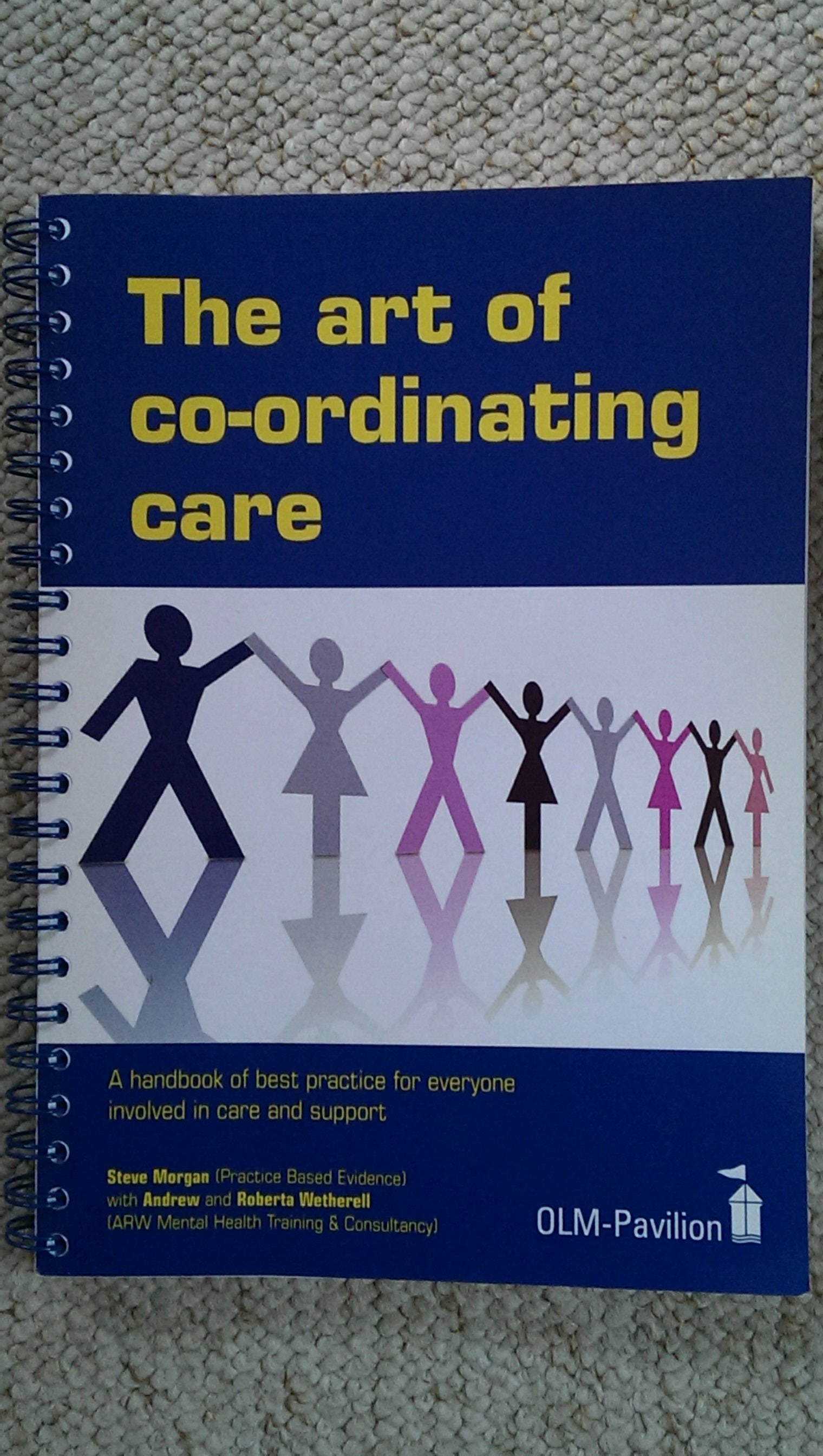
Check out my 2009 publication The Art of Co-ordinating Care, written with Andrew & Roberta Wetherell, for the best practice to achieve person-centred working and delivery of care and support.

Podcast Episode 061: Constructing Strengths Assessments [3]

TheStrengthsRevolution_albumart_2-2Building up a strengths assessment based on personal reflection, or helping others to construct a picture requires a positive outlook and a determination to enquire into what has worked in the past, what is working at present, and what is wanted in the future.

Alongside the picture of who we are, we should concentrate on building the picture of what we have and what we want. In the practical but essential components of shelter, finances and relationships, it is important to reflect on what works for each of us, and why it works? In terms of housing, where we live can be equally as important as what type of accommodation we prefer to live in.

In this episode I explore the questions that help us to dig for the detail around home, work, relationships, leisure, daily living, and spiritual reflections.

For the full content of this episode click on the links to iTunes and Sound Cloud (or go to Stitcher Radio):

https://itunes.apple.com/gb/podcast/strengths-revolution-steve/id867043694

https://itunes.apple.com/gb/podcast/061-constructing-strengths/id867043694?i=343344278&mt=2

“Being deeply loved by somebody gives you strength, while loving someone deeply gives you courage.” [Lao Tzu].