Tag Archives: Talents

Podcast Episode 080: Steve Onyett RIP

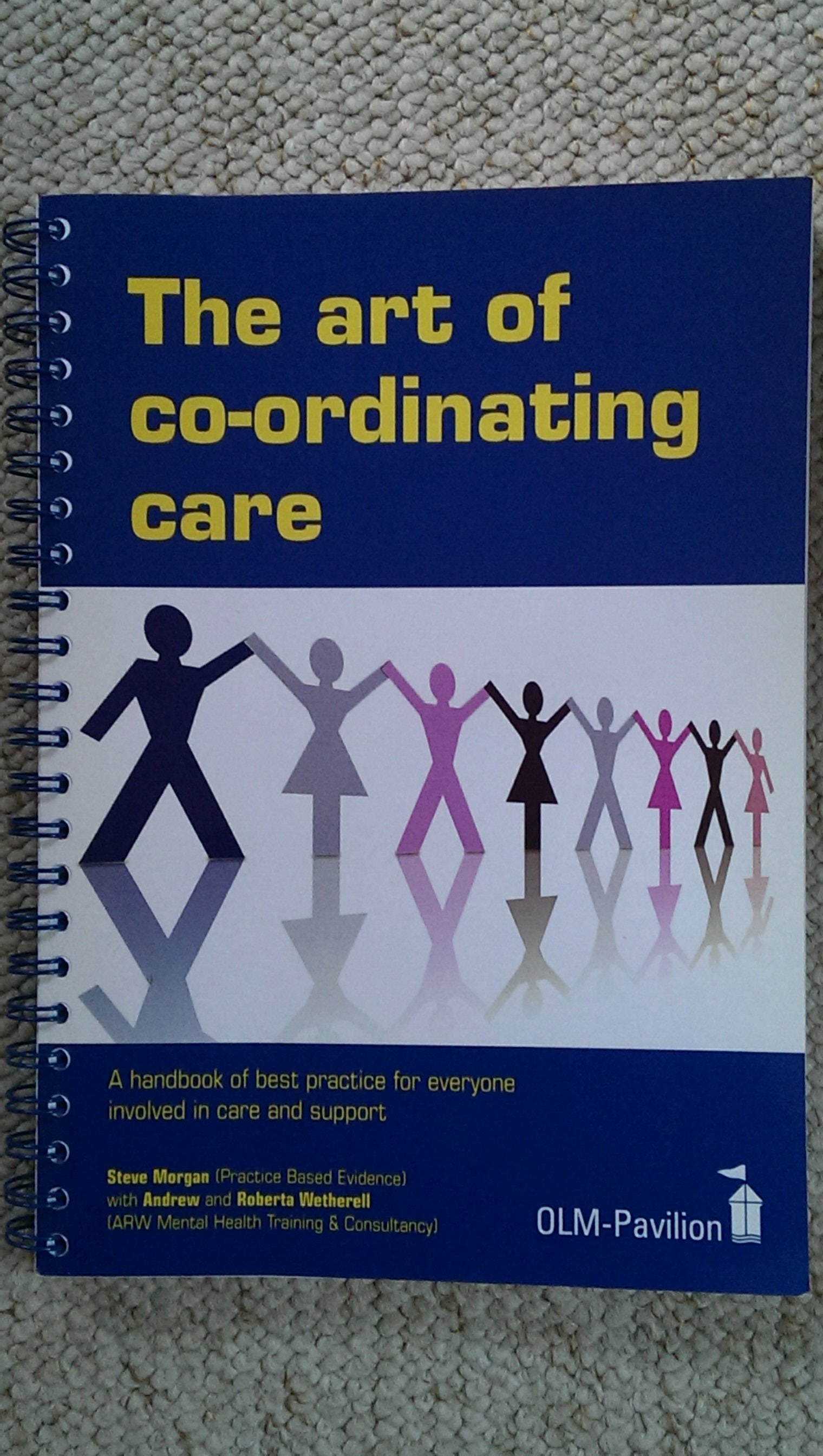
IMG_2565xx-682x1024It’s 1992, I’m submitting the manuscript for the publication of my first book. Anticipation is tinged with anxiety, an anonymous reviewer holds the power to launch or terminate my fledgling writing career. All fears immediately recede as I receive pages of positive comment and constructive critique. Many references are made to a newly published book ‘Case Management in Mental Health’ (he beat me to that title by 6 months) give away the source of the review. Steve never did anonymity very well!

Fast-forward 22 years through my publications CV and I realize my latest book would benefit from an appropriate foreword from a recognized expert. They say ‘when you want something doing ask a busy person’, that should have been coined about Steve Onyett as he agreed unequivocally and produced a pitch perfect reflection of the book. Who else could get royalty and the act of farting into a mental health textbook with such skill?

In 2009, while facilitating a team development workshop, I received two of the finest compliments I have ever received. Two senior and experienced practitioners enthusiastically told me how influential my book had been on their work. As they elaborate further it becomes clear to me they are talking about ‘Teamworking’, published by Steve in 2003. As I had been acknowledged in his book I decided to unashamedly bask in the reflected glory. Being Steve Onyett for a few minutes still ranks as one of my finest moments! He loved that anecdote when I recently revealed it to him, but couldn’t help but try to reflect any glory back to me. Steve had a particular modesty when it came to appraising his own work.

In his relationship to others the word that comes to mind for me in describing Steve would be generosity. He gave of his time, but perhaps more important was the quality of that gift. Steve had a generosity of spirit that shone through his passion to understand and help people. To describe Steve by his professional role of psychologist is to miss the point; he was a humanist who believed in the potential of others and dedicated his life to supporting and developing people. His choice of the Spanish word ‘Entero’ was apt for describing his passion for the whole person, supporting people to discover or recover their own solutions, identity and true place in the world.

His conference presentations were dynamic and engaging, and his workshops were always a passionate process of exploration and discovery. Steve understood the stupidity of some of the systems we have created, but was always prepared to work within them to create better leadership and conditions for change. He infused everything he did with a big heart, but on 28th September 2015 that heart tragically failed him. I lost my greatest guide and mentor, and the world of mental health lost one of its brightest lights. To use one of his favourite words, knowing you Steve was truly ‘groovy’… rest in peace my dear friend.

For the full content of this episode click on the links for iTunes and Soundcloud (or go to Stitcher Radio):

https://itunes.apple.com/gb/podcast/strengths-revolution-steve/id867043694

https://itunes.apple.com/gb/podcast/080-steve-onyett-rip/id867043694?i=355718155&mt=2

This tribute was originally drafted for inclusion on the Centre for Mental Health website at the following link:

http://www.centreformentalhealth.org.uk/News/tribute-to-steve-onyett
Podcast Episode 079: How can we ‘do’ recovery?

TheStrengthsRevolution_albumart_2-2In recent episodes I have explored the meaning of recovery and concluded that I fully support the original intentions of its service user creators, but despair at the corporate take-over and misappropriation of a good idea. I have also explored how the ‘can do’ strengths approach lends practical reality to the conceptual language of recovery. But how does recovery happen in practice?

In this episode I explore some of the resistance that it, and most new concepts, confront alongside the challenges within a deep-rooted culture that need to change in order to provide the conditions for these good ideas to flourish. I also explore the tools that have been created to implement recovery, but argue in favour of choice if we are to inhabit the service user’s life with the trappings of bureaucracy. Finally, I identify recovery as yet another concept where family/carers express concerns at feeling like they are an afterthought in the discussion of what happens in the delivery of a service.

For the full content of this episode click on the links to iTunes or Sound Cloud (or go to Stitcher Radio):

https://itunes.apple.com/gb/podcast/strengths-revolution-steve/id867043694

https://itunes.apple.com/gb/podcast/079-how-can-we-do-recovery/id867043694?i=355718152&mt=2

“Recovery is something you have to work on every single day, and it’s something that doesn’t get a day off.” [Demi Lovato].


Podcast Episode 078: Making sense of recovery

TheStrengthsRevolution_albumart_2-2Having explored the concept of recovery in the previous episode I concluded that I fully support the original service users’ intentions but despair at the corporate take-over of manifestly good ideas in order to decorate their own complex and confused way of going about things.

As a realist I have to accept that recovery has become a leading mantra headlining the development of 21st century mental health services, but I struggle with the degree of confusion expressed by so many practitioners who would rather not be asked to describe what it actually means. What does the Strengths Approach lend to this set of circumstances?

In this episode I compare the language of the principles of recovery with the practical ‘doing it’ approach offered by the strengths movement. We can sit around and talk about conceptualisations as long as we like, but at some point someone has to do something, and that is where the strengths approach comes into its own.

For the full content of this episode click on the links to iTunes or Sound Cloud (or go to Stitcher Radio):

https://itunes.apple.com/gb/podcast/strengths-revolution-steve/id867043694

https://itunes.apple.com/gb/podcast/078-making-sense-of-recovery/id867043694?i=353576161&mt=2

“I know now that we never get over great losses; we absorb them, and they carve us into different, often kinder, creatures.” [Gail Caldwell].

Podcast Episode 077: What is recovery?

TheStrengthsRevolution_albumart_2-2‘Recovery’ can simply be described as to regain, get back or restore something which has been lost, but in health and social care services we don’t tend to go for the simple and straight forward, particularly when confused and complicated are on offer.

I fully support the concept of recovery, as it was originally identified by service users, but I despair at how easily those in power feel able to misappropriate good ideas to dress up their otherwise complex demands. Now I tend to see recovery as something designed by service users, hijacked by commissioners, managers and politicians, and crashed by practitioners.

In this episode I explore how a uniquely personal and individual concept of great merit and purpose has become subsumed into the corporate world of strategic direction, and subsequently lost in translation. The original pioneers foretold in warnings of how the concept will lose its power when it becomes systematised, but the world of bureaucracy is not known for heeding warnings, particularly if they don’t appeal to the perpetual need to homogenise the individual experience.

For the full content of this episode click on the links to iTunes and Sound Cloud (or go to Stitcher Radio):

https://itunes.apple.com/gb/podcast/strengths-revolution-steve/id867043694

https://itunes.apple.com/gb/podcast/077-what-is-recovery/id867043694?i=353576160&mt=2

“You can get the monkey off your back, but the circus never leaves town.” [Anne Lamott].

Podcast Episode 076: What is solution focused therapy?

TheStrengthsRevolution_albumart_2-2Solution Focused Therapy has been established in the US since the early 1970’s, but didn’t make an impact in Europe until the mid to late 1980’s.

The approach is largely attributed to Steve de Shazer, and has garnered considerable favour with the attibution of ‘Brief’ in front of its title. Many clients and practitioners alike favour the specific focus on finding solutions through brief interactions and short term interventions. In my work presenting a strengths approach I have often encountered practitioners asking ‘isn’t this a bit like Brief Solution Focused Therapy?’

In this episode I examine the strengths credentials of this approach, with reference to its underlying core principles, the therapeutic roles of clients and practitioners, and its therapeutic approach underpinned by specific lines of inquiry. Discover the secrets of the ‘miracle question’.

For the full content of this episode click the links for iTunes and Sound Cloud (or go to Stitcher Radio):

https://itunes.apple.com/gb/podcast/strengths-revolution-steve/id867043694

https://itunes.apple.com/gb/podcast/076-what-is-solution-focused/id867043694?i=352344729&mt=2

“Every great and deep difficulty bears in itself its own solution. It forces us to change our thinking in order to find it.” [Niels Bohr].

Podcast Episode 075: What is motivational interviewing?

TheStrengthsRevolution_albumart_2-2We all know what motivation is… it is what gets us out of bed and out of the door. But what if you have a problem with alcohol, or with misuse of other drugs? What role does motivation play in our desire or ability to change our behaviour patterns?

In this episode I explore the strengths-based credentials of the concept of motivational interviewing. Introduced by William Miller in the early 1980’s, this has become a prominent therapeutic intervention in the field of substance misuse, but what is the concept based on, and how does it work in practice? I attempt to briefly explore some of the questions posed here, look at the strengths & motivational interviewing research, and establish a link to the cycle of change.

For the full content of this episode click on links to iTunes and Sound Cloud (or go to Stitcher Radio):

https://itunes.apple.com/gb/podcast/strengths-revolution-steve/id867043694

https://itunes.apple.com/gb/podcast/075-what-is-motivational-interviewing/id867043694?i=351577833&mt=2

“It does not matter how slowly you go as long as you do not stop.” [Confucius].

“You are never too old to set another goal or to dream a new dream.” [C.S. Lewis].

Podcast Episode 074: What is positive psychology?

TheStrengthsRevolution_albumart_2-2Take a picture of this… it’s 1998 and Martin Seligman is just installed as president of the American Psychological Association. He challenges the massed ranks of psychology professionals to change their fundamental ethos, from a focus on pathology to a pursuit of what makes for an excellent life.

Positive Psychology is born; but does it match up to its claims to be the birth of a strengths way of thinking for developing a healthy and fulfilling life? Probably not; but what psychologists can lay a more robust claim to is applying the life scientific to a strengths approach.

In this episode I explore the underlying claims and concepts that have become known as positive psychology, and also identify how it is put into practice. I also outline the virtues and character strengths that make up the ‘manual of the sanities’.

For the full content of this episode click on the links to iTunes and Sound Cloud (or go to Stitcher Radio):

https://itunes.apple.com/gb/podcast/strengths-revolution-steve/id867043694

https://itunes.apple.com/gb/podcast/074-what-is-positive-psychology/id867043694?i=351577834&mt=2

“Positive anything is better than negative nothing.” [Elbert Hubbard].

Podcast Episode 073: What is appreciative inquiry?

TheStrengthsRevolution_albumart_2-2AI is more frequently known as Artificial intelligence, but in the context of organisational change I am focusing this episode on Appreciative Inquiry. But, apart from the simple assumption of showing some appreciation to another person, what is it?

David Cooperrider and colleagues have claimed this to be a uniquely strengths-based approach to the leadership and management of organisational change; and also that strengths-based management may just be the management innovation of our time!

However, the concept of change does not sit easily with everyone; for one thing, it can give the impression that there is never enough time to implement some seriously good ideas before the next management initiative is passed down.

In this episode I outline the strengths credentials of Appreciative Inquiry, its 4-dimensional cycle, as well as the 5 principles and 6 essential conditions for it to occur. It may require skilled facilitation by a trained practitioner, but it also offers all of us a positive language to adopt and apply to our own thinking about the organisations we presently inhabit.

For the full content of this episode click the links to iTunes and Sound Cloud (or go to Stitcher Radio):

https://itunes.apple.com/gb/podcast/strengths-revolution-steve/id867043694

https://itunes.apple.com/gb/podcast/073-what-is-appreciative-inquiry/id867043694?i=351497308&mt=2

“A well designed system filled with ordinary but well-trained people can still achieve consistently high performance; whereas a badly designed system can make a genius look like an idiot.” [Pfeffer and Sutton].

Podcast Episode 065: Puncturing pomposity

Person-centred (2009)

Why are we so enamoured with our impenetrable jargon and gobbledegook? All professions adopt it, seemingly as a badge of membership, and as an illustration of their special exclusivity. For the outsider, having the unfortunate need of the services of a professional, the langauage is often likely to be the first insurmountable barrier.

In this episode aI briefly explore how meetings can be fun experiences. In the undignified way you might want to adopt a game of ‘bullshit bingo’. In a more dignified way, it is a chairperson’s role to give permission for the use of the more humourous examples and anecdotes, even when the overall subject matter is heavy and serious. It should be more about encouraging lateral or creative thinking, but do it in simple and accessible language.

For the full content of this episode click on the links to iTunes and Sound Cloud (or go to Stitcher Radio):

https://itunes.apple.com/gb/podcast/strengths-revolution-steve/id867043694

https://itunes.apple.com/gb/podcast/065-puncturing-pomposity/id867043694?i=346798306&mt=2

“I think there needs to be a meeting to set an agenda for more meetings about meetings.” [Jonah Goldberg].

Podcast Episode 064: Control freaks need not apply

Person-centred (2009)

Can the chairing of meetings, the very thing we often want to avoid, actually be fun? In this episode I discuss how the overall effectiveness of meetings can be directly proportional to the effectiveness of the chairperson.

Those who operate as control freaks with an over-inflated sense of self-importance, or those who are democratic to the point of becoming all talk and no action, are equally ineffective. The concept of the ‘revolving chair’ should just be left spinning.

I outline an approach to meetings that views them akin to a 3-act play, with several practical tips for fulfilling the role. I also outline the need for preparation and skilled facilitation as a pre-requisite for an effective chairperson. What does a strengths approach to managing the ebb and flow of meetings look like?

For the full content of this episode click on the links to iTunes and Sound Cloud (or go to Stitcher Radio):

https://itunes.apple.com/gb/podcast/strengths-revolution-steve/id867043694

https://itunes.apple.com/gb/podcast/064-control-freaks-need-not/id867043694?i=345038675&mt=2

“If you want to kill any idea in the world, get a committee working on it.” [Charles Kettering].