In this video I share a wide range of quotes that reflect different aspects of risk-taking. Indeed, I would suggest they help us to understand and reflect on the whole rationale that underpins why we should be taking calculated risks.
Use the following link to also access a free training webinar which introduces my simple 5-step process to risk decision-making, which also form the core modules of the Positive Risk-Taking Membership Site:
Risk decisions are frequently challenging situations to us individually. A risk averse stance can be expected, not least out of the thoughts for self preservation. Collaborative decision-making provides the foundation for increased information, collective reflection, and confidence through shared accountability.
Use the following link to also access a free training webinar which introduces my simple 5-step process to risk decision-making, which also form the core modules of the Positive Risk-Taking Membership Site:
Risk assessment is inherently negative in the information it provides, naturally driving us to be more restrictive or risk averse. It is strengths information that will provide the basis for confidence in order to move forward in taking appropriate risks.
Use the following link to also access a free training webinar which introduces my simple 5-step process to risk decision-making, which also form the core modules of the Positive Risk-Taking Membership Site:
Working with risk and making risk decisions is an essential part of the work of any practitioner in health and social care settings. But, is our risk training really fit for purpose in many organisations? The following short video sets out the case for a training strategy focused more on teams, in order to be a more effective use of time and resources.
Use the following link to also access a free training webinar which introduces my simple 5-step process to risk decision-making, which also form the core modules of the Positive Risk-Taking Membership Site:
The following short video is a message focusing on a main theme presented in my Positive Risk-Taking Membership Site.
Use the following link to access a free training webinar which introduces my simple 5-step process to risk decision-making, which also form the core modules of the Positive Risk-Taking Membership Site:
We all work with risk; we all have to make risk decisions, and sometimes those decisions involve the challenge of taking risks. Part of overcoming the challenges resides in our awareness of our own mindset in relation to risk. I have a simple 5-step approach to helping me make the challenging decisions… in work as well as in life.
Click on the following link to access a free webinar that provides 40+ minutes of training in the challenges risk can present, and an introduction to my 5-step approach:
This webinar condenses 30+ years of my experience working in and alongside health and social care services, and 60+ publications around the subject. Risk is something we should embrace from a positive perspective, and this webinar develops this mindset.
We shouldn’t be happy just being critics; do so with constructive responses, so you are always being helpful in your role of criticising others. I have been a critic of the management culture in general in recent episodes of this show, but also need to stand up and be counted in my response alongside my criticism.
I have chosen a process of transformation of my own recent work, particularly positive risk-taking and risk decision-making, to align it more with the needs of more senior managers and business leaders. These are people who are continually making high risk decisions, but in my experience in health and social care they commission me to work with their practitioners and teams, but don’t take part in any of the work. It is my intention to refocus my work through the EPIC Program of online marketing and coaching, into a transformation statement directed to my new ideal client avatar through a new webinar that can lead some people through strategy sessions into my signature programme.
It is my intention to offer a high degree of transformation for senior people experiencing difficulties or fears in relation to their decision-making. Michelle Mone is a lingerie tycoon who has recently publicly spoken about her daily fears about these decisions, despite being a very successful entrepreneur, so Michelle helps me to identify the type of people I would ideally want to be working with.
Steve realised he misread the idea of a Google Hangout when nobody turned up to the venue he booked!
For the full content of this episode click on the links to iTunes and Sound Cloud (or go to Stitcher Radio):
I am often mindful of the need to criticize the quality of leadership and management in health and social care services; particularly the obsession with numbers, the tick-box mentality, and the blind faith placed in targets for driving change and daily practice across services. I am surely not a lone voice in this critique, but is it valid or just a reaction against the sound of the pips squeaking?
I do believe that an absence of targets or defined outcomes, and a failure to establish high standards for provision of services only leads to inconsistencies between practitioners and teams… what is often referred to as a postcode lottery. Service users don’t deserve to be on the receiving end of either stressed out practitioners fearful of constant criticism, or laid-back practitioners doing their own thing. Audit and regulation have a place, but surely they need to be clearly joined up to practice, not existing in a vacuum somewhat disconnected from the realities within which good practice has to operate.
The ever-growing chasm between person-centred practice and business-focused managerialism does little to promote a culture of organizational collaboration that may encourage a more engaging form of audit and regulation across services. My solution would be to eliminate most of the current audit requirements imposed on practitioners and teams, particularly that which they experience as wholly time-consuming and unhelpful. So far so good, say the practitioners amongst you; please do share your thoughts, but read on before you do…
Over the last 12 years, through the Practice Based Evidence initiative, I have been developing tools designed specifically for use by practitioners and teams. These tools have flexible uses: personal reflection, individual supervision, team development and team evaluation. Used diligently they should be able to provide a host of qualitative and quantitative data, which in turn should offer useful feedback to practitioners and teams for practice development purposes.
Updated Risk Resource (2013)
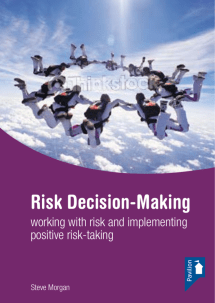
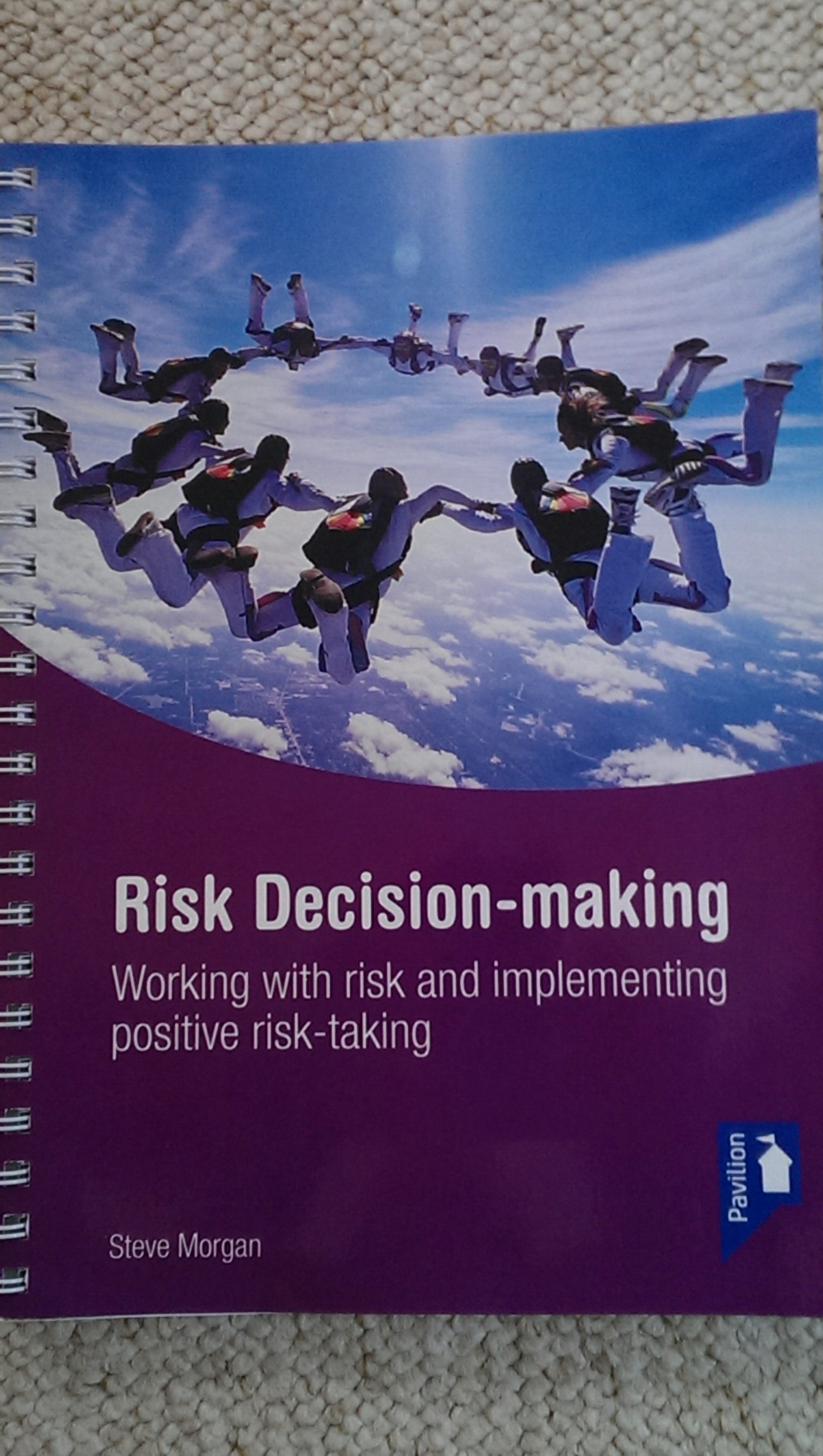
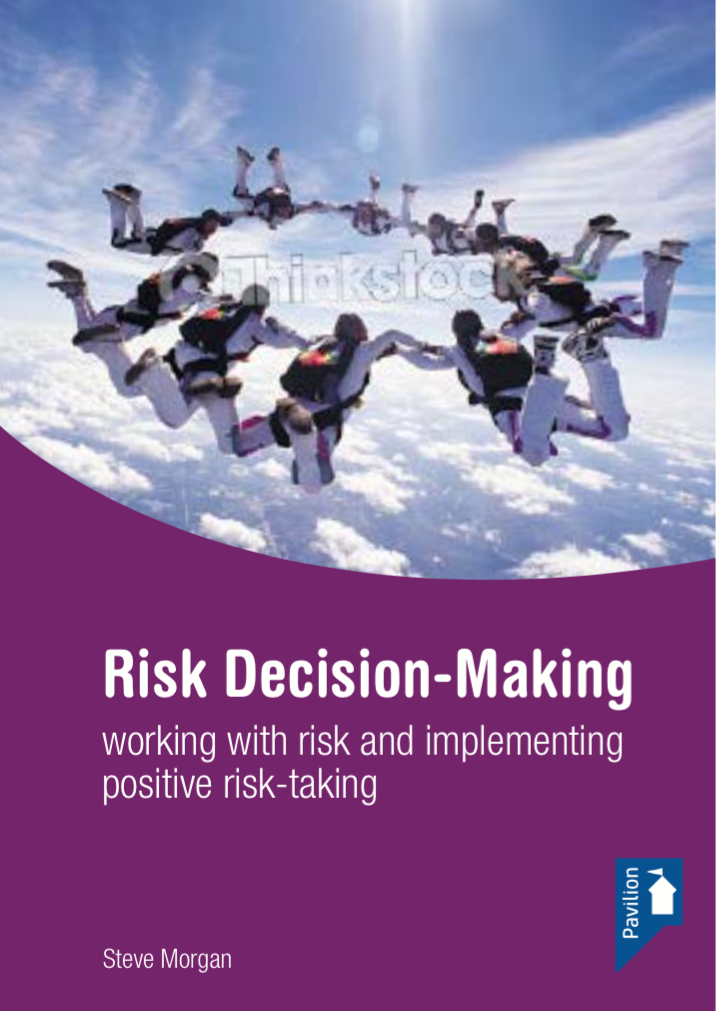
The Risk Decision-Making publication includes examples of these tools, and a specific example of data emerging from their use in a specific organization to help identify good practice and priorities for further development.
So, the sting in this tail is that practitioners and teams need to own the processes of audit and regulation if they are to reflect and develop good practice. For those auditors and managers fearful of losing their jobs if Practice Based Evidence emerged as the norm, you could always make use of the data to tick your boxes; better still, you could prioritise your time more effectively by getting in and alongside practitioners and teams to support a quality revolution. You might then be in a stronger position to challenge and inform the thinking of the inter-galactic warlords from distant planets a.k.a. commissioners, Department of Health, Care Quality Commission.
Are you taking the risk? It is something we all do, but why do we confuse and complicate it by our lackadaisical use of language? We take risks in order to gain something for ourselves, and occasionally others. We weigh up the options available to us, and make a decision based on what we compute to be the most beneficial course of action. It is called positive risk-taking not because we are trying to find a ‘positive risk’ (whatever that is), but because we are taking the risk in order to achieve a positive outcome (the gain or benefit). So, the word positive is about the outcome not about the risk! I am also not talking about ‘positive risk management’, which sounds too general and like unnecessary window-dressing of a process more often seen as negative or risk-averse. The word positive is being added to risk-taking, in my context, in order to bring some clarity and specific detail to your thinking.
We revere risk-takers in the worlds of sport, entertainment and business, tending to attribute degrees of awe to their decision-making and achievements. Do you think Ayrton Senna planned his route, speed and overtaking manoeuvres around the race-track because he thought the risk would be nice? Does Warren Buffett make his financial decisions based on a spin of his favourite coin? It is more than likely that both of these people employed complex ways of weighing up the pros and cons of choices facing them, sometimes with careful thought and consideration, and sometimes distilling a lifetime of experience into a split second. So do we, in our own personal circumstances.
So, next time you are leaning on a bar deciding whether to have that extra Babycham, remember that positive risk-taking is weighing up the pros and cons of your particular set of circumstances at that time. Whereas the positive risk is simply the chance that they might taste better the more you have; and the positive risk management is the hope that those around you will help you home instead of tying you to a lamp-post at the end of the night. These concepts mean different things, so be clear when you use language, only positive risk-taking is thoughtful and considered. But… what do you think?
Positive risk-taking and risk decision-making are challenges that can be achieved with greater confidence if the right conditions are in place. For practitioners in health and social care services, and for others beyond these services, a number of factors can influence your degree of confidence in your decision-making.
Being genuinely person-centred, as we are always dealing with an individual with their unique combination of strengths alongside the problems and risks. Good team-working, and support and supervision, can greatly influence the quality of decisions influenced through the culture of the team or service. The issue of ‘culture’ should also extend to the wider organisation, through the understanding of positive risk-taking and processes of risk decision-making, and supporting people’s decisions irrespective of the outcome if they have followed reasonable guidelines of good practice.
Accessing appropriate tools to guide and influence decision-making, as well as prioritising the time needed for those more complex and challenging decisions.
For the full content of this episode click on the links to iTunes and Sound Cloud (or go to Stitcher Radio):

![Jazz guys on Frenchman Street [2]](https://strengthsrevolution.net/wp-content/uploads/2017/07/jazz-guys-on-frenchman-street-2.jpg?w=296&h=395)
 Working with risk and making risk decisions is an essential part of the work of any practitioner in health and social care settings. But, is our risk training really fit for purpose in many organisations? The following short video sets out the case for a training strategy focused more on teams, in order to be a more effective use of time and resources.
 The following short video is a message focusing on a main theme presented in my Positive Risk-Taking Membership Site.


 The Strengths Revolution