Occupational Therapist since 1986, Case Manager since 1990, Author since 1993, Consultancy since 2001. Launched a blog from 2013, a podcast in 2014, and YouTube videos from 2017.
Can the chairing of meetings, the very thing we often want to avoid, actually be fun? In this episode I discuss how the overall effectiveness of meetings can be directly proportional to the effectiveness of the chairperson.
Those who operate as control freaks with an over-inflated sense of self-importance, or those who are democratic to the point of becoming all talk and no action, are equally ineffective. The concept of the ‘revolving chair’ should just be left spinning.
I outline an approach to meetings that views them akin to a 3-act play, with several practical tips for fulfilling the role. I also outline the need for preparation and skilled facilitation as a pre-requisite for an effective chairperson. What does a strengths approach to managing the ebb and flow of meetings look like?
For the full content of this episode click on the links to iTunes and Sound Cloud (or go to Stitcher Radio):
Within the context of service-centred working can a meeting ever be person-centred?
In this episode I outline experiences of ward rounds and community reviews that are frequently presented by the services as being person-centred, but are clearly service-centred.
Our use and misuse of language is more often than not a reflection of our values and ultimately a reflection of what we deliver as a service, so it needs careful attention.
Attendance at meetings does not equate to involvement in meetings. So what will it take to make service meetings, particularly client reviews more genuinely person-centred? I present four messages to guide us towards this aim.
For the full content of this episode click the links to iTunes and Sound Cloud (or go to Stitcher Radio):
“If you had to identify, in one word, the reason why the human race has not achieved, and never will achieve, its full potential, that word would be ‘meetings’.” [Dave Barry].
How effective are all of the meetings you attend? It’s very likely that whatever business you are working in you will have to attend meetings either occasionally or frequently. They take up an inordinate amount of time, but the question is just how much time are they wasting?
In this episode I will take a formal definition of meetings, but add my twist with several reflections on how I have experienced meetings on occasions. Hot-air, self-importance, shared insecurities, ineffective time-wasting… but enough of me!
How can we attempt to make this precious time as effective and engaging as possible? I set out seven pointers that can help achieve these goals in ways that either reflect the good practice you are already doing, or will transform the experience of all who need to be attending.
For the full content of this episode click on iTunes and Sound Cloud (or go to Stitcher Radio):
Care co-ordination, the role of the care co-ordinator, has become a challenging function of our care and support services, attracting more than its fair share of negative connotations. A genuine tension exists between the passion and artfulness of human relationships on the one hand, and the pursuit of a scientific basis for interventions on the other. The science of research seeks to impose a sense of reassurance by means of consistent results when defined sets of circumstances are observed or applied.
By contrast, the quality of an artful endeavour may be measured more by its emotional characteristics and the feelings it engenders in those involved or observing. In reality, the experience and practice of mental health and learning disability services is primarily a study of people’s emotional experiences, feelings and behaviour patterns. So we should be wary of any attempts to understate the elements of artfulness and passion; and we should recognise the potential impact this may have on our enjoyment of the work, as well as our motivation for doing it.
Arguably, one of the most crucial effects of the evidence-based practice focus of research is that it undermines the art of relationship-building. The pursuit of a rigorous scientific rationale places a clear priority on the cult of numbers. ‘How many?’ and ‘How frequently?’ and ‘How quickly?’ become the valued quantitative outcomes of an efficient service. But what is the cost of this, in terms of an effective, good quality experience for the individual service user within this wider research picture? Or, indeed, what is the cost of its impact on the qualitative experience of the work that, for many practitioners, is their motivation? Ideally, we need to strike a careful balance between art and science in the delivery of good quality care and support.
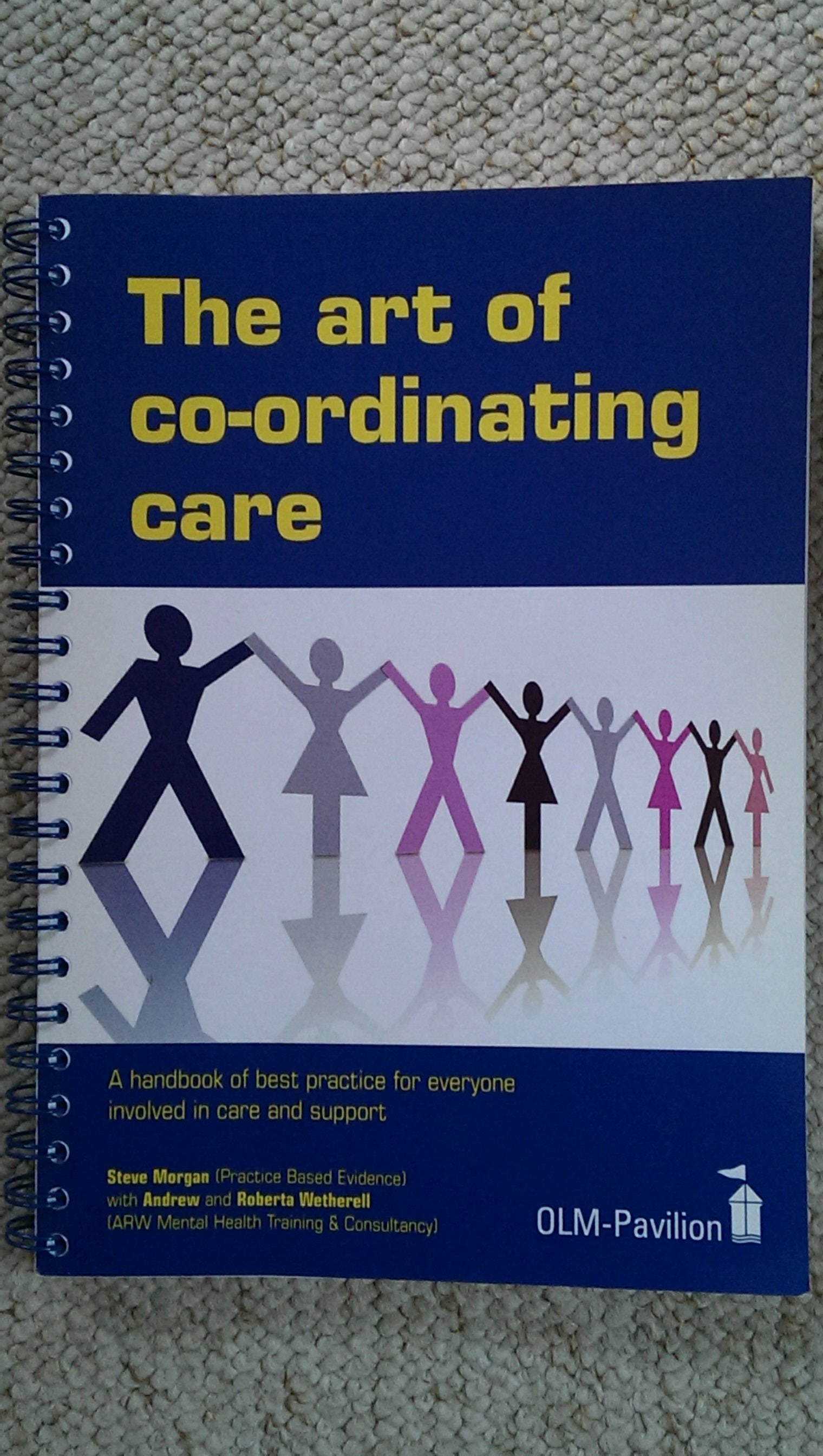
Check out my 2009 publication The Art of Co-ordinating Care, written with Andrew & Roberta Wetherell, for the best practice to achieve person-centred working and delivery of care and support.
Building up a strengths assessment based on personal reflection, or helping others to construct a picture requires a positive outlook and a determination to enquire into what has worked in the past, what is working at present, and what is wanted in the future.
Alongside the picture of who we are, we should concentrate on building the picture of what we have and what we want. In the practical but essential components of shelter, finances and relationships, it is important to reflect on what works for each of us, and why it works? In terms of housing, where we live can be equally as important as what type of accommodation we prefer to live in.
In this episode I explore the questions that help us to dig for the detail around home, work, relationships, leisure, daily living, and spiritual reflections.
For the full content of this episode click on the links to iTunes and Sound Cloud (or go to Stitcher Radio):
Building up a strengths assessment based on personal reflection, or helping others to construct a picture, requires a positive outlook and a determination to enquire into what has worked in the past, what is working at present, and what is wanted in the future. It is about developing an inventory of resources that can then be productively applied to achieving desired future priorities and/or managing life’s difficulties and challenges with greater skill and confidence.
It should start from some of the big open-ended questions about who we are, and what we like about ourselves, and what we want for the future. With this standpoint in mind, a reflection on personality traits and personal qualities helps to focus attention more on the question of who we are.
In this episode I briefly explore some of the personality traits and qualities that help to define us, and how we might identify them in ourselves or others. Issues of health are also explored alongside these traits.
For the full content of this episode click on the links to iTunes and Sound Cloud (or go to Stitcher Radio):
How do we go about constructing a strengths assessment? Whether it be reflecting on our selves or working with other people, it is a flexible process developed over time, not a function to be mandated, timed and audited by a managerial approach.
For ourselves, it happens as and when we give ourselves time for reflection. With others, it is best achieved through an informal, conversational approach where the other person feels most comfortable; or it emerges from snippets of conversations over a period of time.
The focus is to build a positive picture, that can then be applied to achieving the goals we set for ourselves, or others set for themselves. It can be prompted and supported by paper or electronic forms, but they are purely supportive tools not the end purpose.
It can be developed by and within teams, but the key is always to be engaging the fullest involvement of the specific person who is the subject of the strengths assessment. In this episode I outline the five main areas of consideration for developing the practice of constructing a strengths assessment.
For the full content of this episode click on the links to iTunes and Sound Cloud (or go to Stitcher Radio):
How do we go about building a picture of our strengths, and those of others? We don’t usually greet each other by enquiring what we are no good at, or what we have recently screwed up; yet we also do not naturally and consistently search deeply for those inner-most strengths and natural talents.
Listen to any conversation between people who have met for the first time, at a conference for example, and they explore what defines each other in a the positive sense of ‘what do you do?’ or ‘what are your specific interests in the subject of the conference?’ We should never make the big decisions based on the negative of weaknesses, we should build it on the drives and motivations, the dreams and aspirations.
In this episode I outline an 8-point checklist as prompts for building up a picture of our strengths. These are our resources, from within us and around us, so we should be devoting more time to identifying them and making best use of them. Ultimately it is our strengths that best equip us to manage our problems and weaknesses. Off the top of your head what would you identify as your best qualities and strengths? Then keep adding to that initial picture over time.
Fir the full content of this episode click on the links to iTunes and Sound Cloud (or go to Stitcher Radio):
How can we make more effective use of targets as a means of developing best practice? Perhaps a more pertinent question is: ‘Can we make effective use of targets at all?’
Nothing drains passion more effectively than constant demands for information to meet apparent targets, asked without consultation or explanation, and with no meaningful returns in the form of useful feedback. Auditing everything has become an industry – but to satisfy what? The function of co-ordinating care, specifically the Care Programme Approach (CPA), has become a focus for quantitative returns that seemingly have little to do with the quality of the working relationships and everything to do with numbers and signatures. As many service users, carers and practitioners will testify, presence at a meeting and signing a form does not necessarily reflect influence, involvement or even truthful agreement with the documented outcomes. Yet, the bureaucratic process keeps requiring the numbers with no apparent reciprocal benefits for practitioners and teams.
I wouldn’t argue against the need for auditing practice; but it does appear from conversations with many practitioners that there are widely differing perceptions about priorities between the management of services and the deliverers of services. Anecdotal sources suggest that most practitioners feel they only receive feedback from audit sources when things go wrong, and that good practice is not confirmed or highlighted when it happens. If practitioners, service users and carers were asked to define the parameters of what needs to be audited, there would be some disagreements between them but the priorities would probably look a lot different from what currently occurs. Most people in the real world are concerned about relationship-building in order to support people to be more self-reliant through identifying and working with their own strengths. Audit needs to be of practice and for practice, with a focus on sustaining current good practice. But that would only put an awful lot of middle management and auditors out of a job, for their focus is ‘change’ for its own sake; as long as the merry-go-round keeps moving they will have a purpose.
See ‘The Art of Coordinating Care’ publication for a detailed framework on delivering a service user-focused, strengths-based, bureaucracy-busting approach to real practice. It has been developed as a reflection of what good practice looks like, but will challenge all practitioners to step up to the mark to deliver values-based personalised services based on working with people’s strengths. Failure to do this leads to the alternative… the more usual current situation of an over-regulated system driven by the need to satisfy the politicians and public that if anything goes wrong ‘it will never happen again’. What the current system can ensure will never happen again is the enjoyment and creativity fuelled by the passion of people who want to make a positive contribution to service users lives.
Feel free to add your own comment about any issues raised above.
“Bureaucracy destroys initiative. There is little that bureaucrats hate more than innovation, especially innovation that produces better results than the old routines. Improvements always make those at the top of the heap look inept. Who enjoys appearing inept?” [Frank Herbert].
In this episode I continue my focus on one of my favourite business books ‘Organizing Genius: The Secrets of Creative Collaboration’ by Warren Bennis & Patricia Biederman. I am interested in their take home lessons final chapter, drawing conclusions about great leadership and great teams from six in-depth case studies.
I use three of my own favourite experiences of being a part of teams that have made significant achievements in their own local ways, both as a personal reflection and as an illustration of the 15 messages identified in the book. The final five messages are explored in this episode, with a focus on optimism and motivations that help drive people to greater achievements. I reflect on the rewards that exciting work provides to those engaged in it, and how great leaders provide what their staff need and then give them freedom to develop and innovate.
For the full content of this episode click on the links to iTunes and Sound Cloud (or go to Stitcher Radio):


 The Strengths Revolution