How do we go about constructing a strengths assessment? Whether it be reflecting on our selves or working with other people, it is a flexible process developed over time, not a function to be mandated, timed and audited by a managerial approach.
For ourselves, it happens as and when we give ourselves time for reflection. With others, it is best achieved through an informal, conversational approach where the other person feels most comfortable; or it emerges from snippets of conversations over a period of time.
The focus is to build a positive picture, that can then be applied to achieving the goals we set for ourselves, or others set for themselves. It can be prompted and supported by paper or electronic forms, but they are purely supportive tools not the end purpose.
It can be developed by and within teams, but the key is always to be engaging the fullest involvement of the specific person who is the subject of the strengths assessment. In this episode I outline the five main areas of consideration for developing the practice of constructing a strengths assessment.
For the full content of this episode click on the links to iTunes and Sound Cloud (or go to Stitcher Radio):
How do we go about building a picture of our strengths, and those of others? We don’t usually greet each other by enquiring what we are no good at, or what we have recently screwed up; yet we also do not naturally and consistently search deeply for those inner-most strengths and natural talents.
Listen to any conversation between people who have met for the first time, at a conference for example, and they explore what defines each other in a the positive sense of ‘what do you do?’ or ‘what are your specific interests in the subject of the conference?’ We should never make the big decisions based on the negative of weaknesses, we should build it on the drives and motivations, the dreams and aspirations.
In this episode I outline an 8-point checklist as prompts for building up a picture of our strengths. These are our resources, from within us and around us, so we should be devoting more time to identifying them and making best use of them. Ultimately it is our strengths that best equip us to manage our problems and weaknesses. Off the top of your head what would you identify as your best qualities and strengths? Then keep adding to that initial picture over time.
Fir the full content of this episode click on the links to iTunes and Sound Cloud (or go to Stitcher Radio):
How can we make more effective use of targets as a means of developing best practice? Perhaps a more pertinent question is: ‘Can we make effective use of targets at all?’
Nothing drains passion more effectively than constant demands for information to meet apparent targets, asked without consultation or explanation, and with no meaningful returns in the form of useful feedback. Auditing everything has become an industry – but to satisfy what? The function of co-ordinating care, specifically the Care Programme Approach (CPA), has become a focus for quantitative returns that seemingly have little to do with the quality of the working relationships and everything to do with numbers and signatures. As many service users, carers and practitioners will testify, presence at a meeting and signing a form does not necessarily reflect influence, involvement or even truthful agreement with the documented outcomes. Yet, the bureaucratic process keeps requiring the numbers with no apparent reciprocal benefits for practitioners and teams.
I wouldn’t argue against the need for auditing practice; but it does appear from conversations with many practitioners that there are widely differing perceptions about priorities between the management of services and the deliverers of services. Anecdotal sources suggest that most practitioners feel they only receive feedback from audit sources when things go wrong, and that good practice is not confirmed or highlighted when it happens. If practitioners, service users and carers were asked to define the parameters of what needs to be audited, there would be some disagreements between them but the priorities would probably look a lot different from what currently occurs. Most people in the real world are concerned about relationship-building in order to support people to be more self-reliant through identifying and working with their own strengths. Audit needs to be of practice and for practice, with a focus on sustaining current good practice. But that would only put an awful lot of middle management and auditors out of a job, for their focus is ‘change’ for its own sake; as long as the merry-go-round keeps moving they will have a purpose.
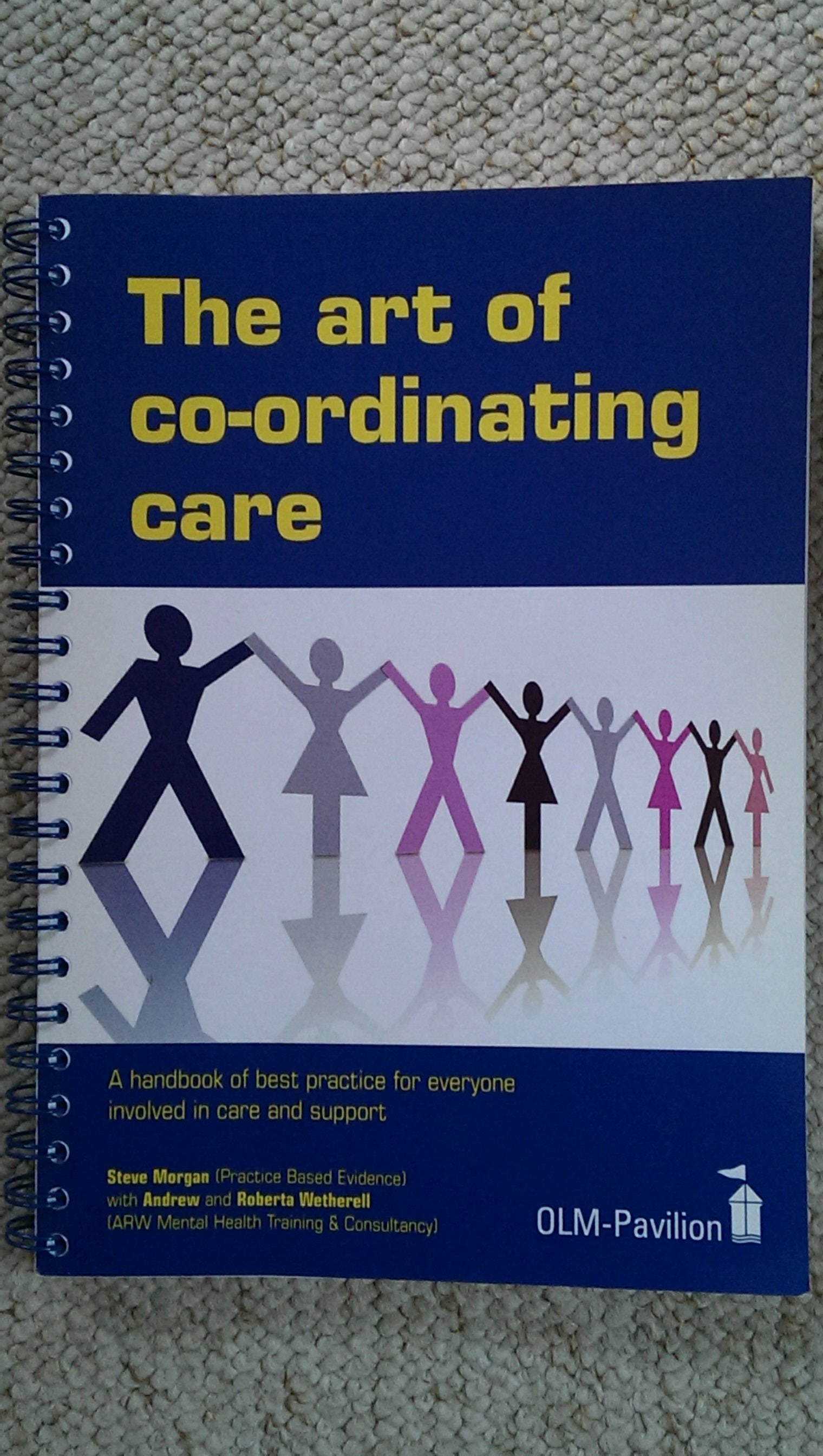
See ‘The Art of Coordinating Care’ publication for a detailed framework on delivering a service user-focused, strengths-based, bureaucracy-busting approach to real practice. It has been developed as a reflection of what good practice looks like, but will challenge all practitioners to step up to the mark to deliver values-based personalised services based on working with people’s strengths. Failure to do this leads to the alternative… the more usual current situation of an over-regulated system driven by the need to satisfy the politicians and public that if anything goes wrong ‘it will never happen again’. What the current system can ensure will never happen again is the enjoyment and creativity fuelled by the passion of people who want to make a positive contribution to service users lives.
Feel free to add your own comment about any issues raised above.
“Bureaucracy destroys initiative. There is little that bureaucrats hate more than innovation, especially innovation that produces better results than the old routines. Improvements always make those at the top of the heap look inept. Who enjoys appearing inept?” [Frank Herbert].
In this episode I continue my focus on one of my favourite business books ‘Organizing Genius: The Secrets of Creative Collaboration’ by Warren Bennis & Patricia Biederman. I am interested in their take home lessons final chapter, drawing conclusions about great leadership and great teams from six in-depth case studies.
I use three of my own favourite experiences of being a part of teams that have made significant achievements in their own local ways, both as a personal reflection and as an illustration of the 15 messages identified in the book. The final five messages are explored in this episode, with a focus on optimism and motivations that help drive people to greater achievements. I reflect on the rewards that exciting work provides to those engaged in it, and how great leaders provide what their staff need and then give them freedom to develop and innovate.
For the full content of this episode click on the links to iTunes and Sound Cloud (or go to Stitcher Radio):
In this episode I continue my focus on one of my favourite business books ‘Organizing Genius: The Secrets of Creative Collaboration’ by Warren Bennis & Patricia Biederman. I am interested in their take home lessons final chapter, drawing conclusions about great leadership and great teams from six in-depth case studies.
I use three of my own favourite experiences of being a part of teams that have made significant achievements in their own local ways, both as a personal reflection and as an illustration of the 15 messages identified in the book. Five further messages are explored in this episode, in addition to the five messages in episode 55 and a final five messages in the next episode. I reflect on the excitement of starting from scratch in helping to develop a new idea, and how great groups feel like they are on a mission, and develop a sense of separateness from all the other services around them.
For the full content of this episode click on the links to iTunes and Sound Cloud (or go to Stitcher Radio):
In this episode I focus on one of my favourite business books ‘Organizing Genius: The Secrets of Creative Collaboration’ by Warren Bennis & Patricia Biederman.
I am interested in their take home lessons final chapter, drawing conclusions about great leadership and great teams from six in-depth case studies. I use three of my own favourite experiences of being a part of teams that have made significant achievements in their own local ways, both as a personal reflection and as an illustration of the 15 messages identified in the book.
Five messages are explored in this and each of the following two episodes of the show. Can great leaders exist without having great people around them, or can great groups exist without a recognised great leader? Can the intense bright light of the great teams be sustained?
For the full content of this episode click on iTunes and Sound Cloud (or go to Stitcher Radio):
Is good leadership the antidote to a poor management culture? It is too simplistic a premise, as what is really needed for supporting the implementation of best practice is good leadership coupled with good management.
The two do not produce good results if working in opposition! It is one thing to have a good vision of where a business or service should be aiming to go, but the what & why questions of leadership need to be complemented by the how & when questions of management. In this episode a number of quotes from recognised management and leadership gurus are explored; and seven characteristics of good leadership are identified.
For the full content of this episode click on the links to iTunes and Sound Cloud (or go to Stitcher Radio):
In this interview Anne Clilverd talks about the important therapeutic value that pets provide for their owners and for others. They offer a remarkable range of functions that can help people across all age groups. She also talks briefly about her work with the Pets as Therapy charity.
For the full content of this episode click on the links to iTunes and Sound Cloud (or go to Stitcher Radio):
In health and social care services we have a long tradition of adopting a scatter-gun approach to staff training. Perhaps this is why staff members often feel negative about mandatory training initiatives, or feel that provision is often made as a knee-jerk response to something going wrong. More generous feedback emerges from events that individual’s have personally chosen to attend, but these often have little positive ripple effect out into the team they are part of… if you weren’t there you simply aren’t going to know much about it.
The Practice Based Evidence initiative has long tried to establish a strengths approach to training, as well as to working with service users. The essence is to get all team members to provide a baseline evaluation of the good and not so good practice in their team, against a series of positive statements of best practice that should be relevant to the way they work. Hence, several Practice Based Evidence tools were devised to address different types of teams and different person-centred approaches to working.
In the case of one of the Newham Community Mental Health Teams in 2006 an honest anonymised evaluation of team practice helped to identify the priorities for a subsequent 5-day programme tailored to their needs. This example illustrates how a practice development approach to training initiatives can respond to the needs identified by practitioners themselves, impact on the practice of a whole team, and engage people more in the process of change. This is how a strengths approach can apply as much to team development as it should do for working with service users.
More recently, in 2014/15, a programme of work with North East London NHS Foundation Trust acute care services focused on the place of positive risk-taking in relation to the work of crisis assessment and home treatment teams, including the teams for adult and older adults services. The programme commenced with team-based training workshops in order to focus in on relevant current clinical material and practices. It was followed up some 6-9 months later with in-service conversational semi-structured interviews of 28 staff, and a further number of Practice Based Evidence designed for purpose evaluation tools. The final reporting is a means of identifying positive practice, as well as giving staff a means for identifying what they can and need to change in order to improve the implementation of best practice.
“Practice is the hardest part of learning, and training is the essence of transformation.” [Ann Voskamp].
We shouldn’t be happy just being critics; do so with constructive responses, so you are always being helpful in your role of criticising others. I have been a critic of the management culture in general in recent episodes of this show, but also need to stand up and be counted in my response alongside my criticism.
I have chosen a process of transformation of my own recent work, particularly positive risk-taking and risk decision-making, to align it more with the needs of more senior managers and business leaders. These are people who are continually making high risk decisions, but in my experience in health and social care they commission me to work with their practitioners and teams, but don’t take part in any of the work. It is my intention to refocus my work through the EPIC Program of online marketing and coaching, into a transformation statement directed to my new ideal client avatar through a new webinar that can lead some people through strategy sessions into my signature programme.
It is my intention to offer a high degree of transformation for senior people experiencing difficulties or fears in relation to their decision-making. Michelle Mone is a lingerie tycoon who has recently publicly spoken about her daily fears about these decisions, despite being a very successful entrepreneur, so Michelle helps me to identify the type of people I would ideally want to be working with.
Steve realised he misread the idea of a Google Hangout when nobody turned up to the venue he booked!
For the full content of this episode click on the links to iTunes and Sound Cloud (or go to Stitcher Radio):

 How do we go about constructing a strengths assessment? Whether it be reflecting on our selves or working with other people, it is a flexible process developed over time, not a function to be mandated, timed and audited by a managerial approach.


 The Strengths Revolution