In recent episodes I have explored the meaning of recovery and concluded that I fully support the original intentions of its service user creators, but despair at the corporate take-over and misappropriation of a good idea. I have also explored how the ‘can do’ strengths approach lends practical reality to the conceptual language of recovery. But how does recovery happen in practice?
In this episode I explore some of the resistance that it, and most new concepts, confront alongside the challenges within a deep-rooted culture that need to change in order to provide the conditions for these good ideas to flourish. I also explore the tools that have been created to implement recovery, but argue in favour of choice if we are to inhabit the service user’s life with the trappings of bureaucracy. Finally, I identify recovery as yet another concept where family/carers express concerns at feeling like they are an afterthought in the discussion of what happens in the delivery of a service.
For the full content of this episode click on the links to iTunes or Sound Cloud (or go to Stitcher Radio):
Having explored the concept of recovery in the previous episode I concluded that I fully support the original service users’ intentions but despair at the corporate take-over of manifestly good ideas in order to decorate their own complex and confused way of going about things.
As a realist I have to accept that recovery has become a leading mantra headlining the development of 21st century mental health services, but I struggle with the degree of confusion expressed by so many practitioners who would rather not be asked to describe what it actually means. What does the Strengths Approach lend to this set of circumstances?
In this episode I compare the language of the principles of recovery with the practical ‘doing it’ approach offered by the strengths movement. We can sit around and talk about conceptualisations as long as we like, but at some point someone has to do something, and that is where the strengths approach comes into its own.
For the full content of this episode click on the links to iTunes or Sound Cloud (or go to Stitcher Radio):
How effective are all of the meetings you attend? It’s very likely that whatever business you are working in you will have to attend meetings either occasionally or frequently. They take up an inordinate amount of time, but the question is just how much time are they wasting?
In this episode I will take a formal definition of meetings, but add my twist with several reflections on how I have experienced meetings on occasions. Hot-air, self-importance, shared insecurities, ineffective time-wasting… but enough of me!
How can we attempt to make this precious time as effective and engaging as possible? I set out seven pointers that can help achieve these goals in ways that either reflect the good practice you are already doing, or will transform the experience of all who need to be attending.
For the full content of this episode click on iTunes and Sound Cloud (or go to Stitcher Radio):
How can we make more effective use of targets as a means of developing best practice? Perhaps a more pertinent question is: ‘Can we make effective use of targets at all?’
Nothing drains passion more effectively than constant demands for information to meet apparent targets, asked without consultation or explanation, and with no meaningful returns in the form of useful feedback. Auditing everything has become an industry – but to satisfy what? The function of co-ordinating care, specifically the Care Programme Approach (CPA), has become a focus for quantitative returns that seemingly have little to do with the quality of the working relationships and everything to do with numbers and signatures. As many service users, carers and practitioners will testify, presence at a meeting and signing a form does not necessarily reflect influence, involvement or even truthful agreement with the documented outcomes. Yet, the bureaucratic process keeps requiring the numbers with no apparent reciprocal benefits for practitioners and teams.
I wouldn’t argue against the need for auditing practice; but it does appear from conversations with many practitioners that there are widely differing perceptions about priorities between the management of services and the deliverers of services. Anecdotal sources suggest that most practitioners feel they only receive feedback from audit sources when things go wrong, and that good practice is not confirmed or highlighted when it happens. If practitioners, service users and carers were asked to define the parameters of what needs to be audited, there would be some disagreements between them but the priorities would probably look a lot different from what currently occurs. Most people in the real world are concerned about relationship-building in order to support people to be more self-reliant through identifying and working with their own strengths. Audit needs to be of practice and for practice, with a focus on sustaining current good practice. But that would only put an awful lot of middle management and auditors out of a job, for their focus is ‘change’ for its own sake; as long as the merry-go-round keeps moving they will have a purpose.
See ‘The Art of Coordinating Care’ publication for a detailed framework on delivering a service user-focused, strengths-based, bureaucracy-busting approach to real practice. It has been developed as a reflection of what good practice looks like, but will challenge all practitioners to step up to the mark to deliver values-based personalised services based on working with people’s strengths. Failure to do this leads to the alternative… the more usual current situation of an over-regulated system driven by the need to satisfy the politicians and public that if anything goes wrong ‘it will never happen again’. What the current system can ensure will never happen again is the enjoyment and creativity fuelled by the passion of people who want to make a positive contribution to service users lives.
Feel free to add your own comment about any issues raised above.
“Bureaucracy destroys initiative. There is little that bureaucrats hate more than innovation, especially innovation that produces better results than the old routines. Improvements always make those at the top of the heap look inept. Who enjoys appearing inept?” [Frank Herbert].
In this episode I continue my focus on one of my favourite business books ‘Organizing Genius: The Secrets of Creative Collaboration’ by Warren Bennis & Patricia Biederman. I am interested in their take home lessons final chapter, drawing conclusions about great leadership and great teams from six in-depth case studies.
I use three of my own favourite experiences of being a part of teams that have made significant achievements in their own local ways, both as a personal reflection and as an illustration of the 15 messages identified in the book. Five further messages are explored in this episode, in addition to the five messages in episode 55 and a final five messages in the next episode. I reflect on the excitement of starting from scratch in helping to develop a new idea, and how great groups feel like they are on a mission, and develop a sense of separateness from all the other services around them.
For the full content of this episode click on the links to iTunes and Sound Cloud (or go to Stitcher Radio):
In this episode I focus on one of my favourite business books ‘Organizing Genius: The Secrets of Creative Collaboration’ by Warren Bennis & Patricia Biederman.
I am interested in their take home lessons final chapter, drawing conclusions about great leadership and great teams from six in-depth case studies. I use three of my own favourite experiences of being a part of teams that have made significant achievements in their own local ways, both as a personal reflection and as an illustration of the 15 messages identified in the book.
Five messages are explored in this and each of the following two episodes of the show. Can great leaders exist without having great people around them, or can great groups exist without a recognised great leader? Can the intense bright light of the great teams be sustained?
For the full content of this episode click on iTunes and Sound Cloud (or go to Stitcher Radio):
I am often mindful of the need to criticize the quality of leadership and management in health and social care services; particularly the obsession with numbers, the tick-box mentality, and the blind faith placed in targets for driving change and daily practice across services. I am surely not a lone voice in this critique, but is it valid or just a reaction against the sound of the pips squeaking?
I do believe that an absence of targets or defined outcomes, and a failure to establish high standards for provision of services only leads to inconsistencies between practitioners and teams… what is often referred to as a postcode lottery. Service users don’t deserve to be on the receiving end of either stressed out practitioners fearful of constant criticism, or laid-back practitioners doing their own thing. Audit and regulation have a place, but surely they need to be clearly joined up to practice, not existing in a vacuum somewhat disconnected from the realities within which good practice has to operate.
The ever-growing chasm between person-centred practice and business-focused managerialism does little to promote a culture of organizational collaboration that may encourage a more engaging form of audit and regulation across services. My solution would be to eliminate most of the current audit requirements imposed on practitioners and teams, particularly that which they experience as wholly time-consuming and unhelpful. So far so good, say the practitioners amongst you; please do share your thoughts, but read on before you do…
Over the last 12 years, through the Practice Based Evidence initiative, I have been developing tools designed specifically for use by practitioners and teams. These tools have flexible uses: personal reflection, individual supervision, team development and team evaluation. Used diligently they should be able to provide a host of qualitative and quantitative data, which in turn should offer useful feedback to practitioners and teams for practice development purposes.
Updated Risk Resource (2013)
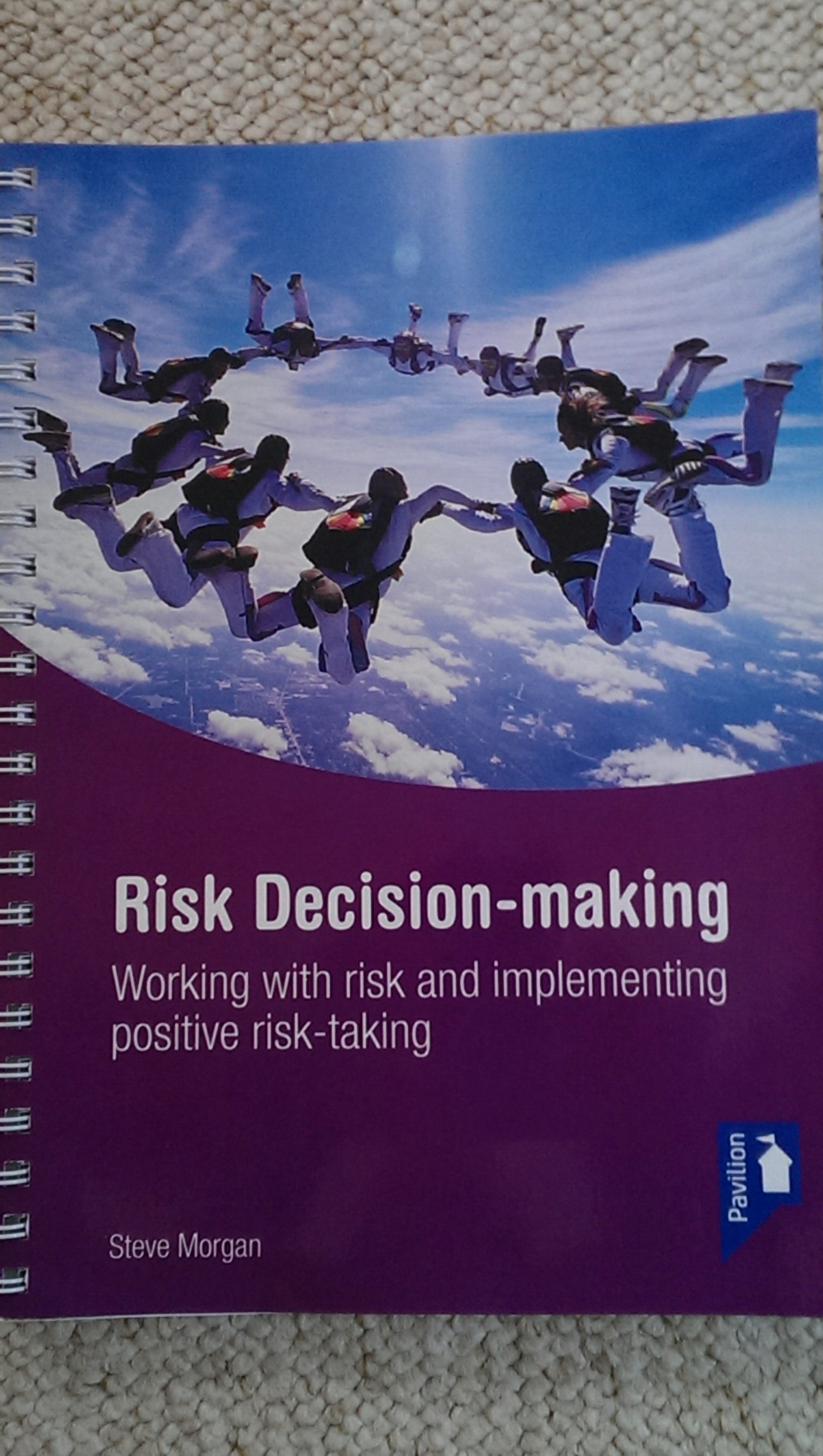
The Risk Decision-Making publication includes examples of these tools, and a specific example of data emerging from their use in a specific organization to help identify good practice and priorities for further development.
So, the sting in this tail is that practitioners and teams need to own the processes of audit and regulation if they are to reflect and develop good practice. For those auditors and managers fearful of losing their jobs if Practice Based Evidence emerged as the norm, you could always make use of the data to tick your boxes; better still, you could prioritise your time more effectively by getting in and alongside practitioners and teams to support a quality revolution. You might then be in a stronger position to challenge and inform the thinking of the inter-galactic warlords from distant planets a.k.a. commissioners, Department of Health, Care Quality Commission.
An interview with Anne Clilverd as she reflects back on three specific teams to identify what elements contribute to good team-working.
An acute admissions ward where, despite being based on a hierarchy, a strong sense of belonging was fostered. The environment was supportive through all staff being encouraged to contribute their observations in a way that was respected by multidisciplinary colleagues.
Compass as a walk-in advice and mental health centre also offering a degree of outreach work as a new initiative at a time when long-stay hospitals were beginning to be closed down. This initiative was joint funded and managed by health and social care, operating as a small multidisciplinary team of four people committed to a strong set of values and principles. As a group the workers need to feel confident to have their ideas openly and constructively critiqued; and they were supported by an advisory group that included several service users and representatives of local voluntary sector services.
As team manager Anne worked in the Kings cross Community Mental Health Team. This type of team functions as a group of individuals who come together for a common purpose, but belonging may be more to the team name than a sense of full collective working. The team manager carries the specific responsibility to stamp a personality on the team through a vision for common goals and purpose, and the quality of supervision as a means for encouraging reflection and professional/personal development.
Anne also briefly reflects on the optimal size of good functioning teams. For the full content of this episode click on the links to iTunes and Sound Cloud (or go to Stitcher Radio):
We all work in teams from time-to-time but how much do we really focus on identifying and developing the individual talents of the workers, and the overall strengths of good team-working?
A team is a group of people coming together for a common purpose or goal, and often it is the challenges and difficulties that define the work of the team that will most influence its outlook in terms of development. All too often teams and services look on training and developing the areas of weakness, to the detriment of boosting and exploiting areas of success into areas of excellence.
In this episode I outline my categorisation of teams in relation to the degree in which they relate to, identify, and work with strengths, and the Team Strengths Assessment tool that I developed in the early 2000’s to support this area of practice development. Examples of three types of mental health teams are referred to as examples where these tools have been used.
To access the full content of this episode click on the links to iTunes and Sound Cloud (or go to Stitcher Radio):
Open Mind was a fabulous social care focused magazine for which I published a number of articles between 2000-2012. The following article was first published in OpenMind 126, Mar/Apr 2004) and was reproduced with their kind permission on my website at Practice Based Evidence.
It remains just as pertinent to practice today as it ever was, so I provide the link here to the strengths-based article. It focuses on the importance of principles, and the need to change the focus of our language in health and social care services to ‘go beyond the alphabet of negativity’…

 In recent episodes I have explored the meaning of recovery and concluded that I fully support the original intentions of its service user creators, but despair at the corporate take-over and misappropriation of a good idea. I have also explored how the ‘can do’ strengths approach lends practical reality to the conceptual language of recovery. But how does recovery happen in practice?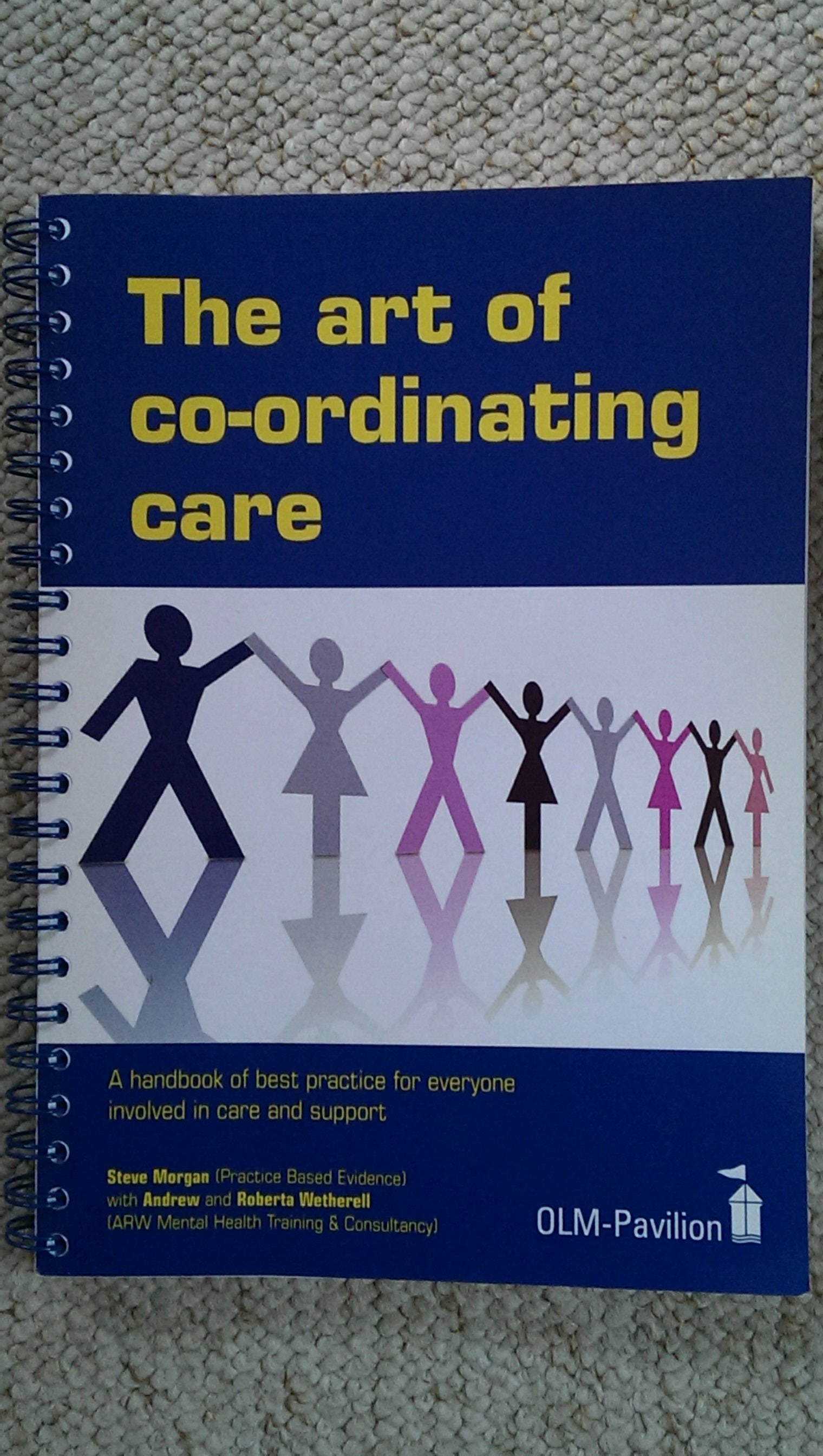

 The Strengths Revolution