Open Mind was a fabulous social care focused magazine for which I published a number of articles between 2000-2012. The following article was first published in OpenMind 126, Mar/Apr 2004) and was reproduced with their kind permission on my website at Practice Based Evidence.
It remains just as pertinent to practice today as it ever was, so I provide the link here to the strengths-based article. It focuses on the importance of principles, and the need to change the focus of our language in health and social care services to ‘go beyond the alphabet of negativity’…
As 2014 draws to a close, and many of you take stock and use a little time to reflect, it is important to celebrate your achievements. For me, this blog and podcast show has been a pure joy to initiate and develop. However, it is underpinned by consistent strengths-based thinking, and I was particularly pleased to be able to publish ‘Working with Strengths…’ this year.
Why listen to the self-styled publicity of the author when you can take the word of an independent expert? The following are extracts from the Foreword written by my very gracious friend Professor Steve Onyett:
Radical in the sense of challenging the status quo. I love the notion of “funky” mental health services where we first break all the rules – not in a spirit of anarchy so much as in recognition of the fact that so many of our current assumptions simply don’t serve. We need more sacred fools who will run into the royal court and fart in front of the King or Queen in order to shake things up and reveal new and better ways.
There is no shortage of guidance around. There is a plethora of exhortations to be positive and focus on strengths from every direction. However, not so many get behind the rhetoric to look with clear and open eyes at how this plays out in reality. This requires that we look not just at what people say they do, but what they do do. It means that we need to look at what happens in practice and learn from that experience.
Steve Morgan is one of our greatest assets in this context. He has been at the forefront of the movement for strengths based practice in mental health services for a long time and has borne witness to both its successes and it’s disappointments. He has brought this invaluable perspective to bear here in a book that tells you pretty much everything there is to know about how things could be, while also equipping you for the stark realities of implementation in challenging contexts. He does this without judgement or cynicism, thereby leaving us with a sense of the possible and a range of first steps that we can take to make it happen. It has been said that a cynic is a passionate person that does not want to be disappointed again (Zander and Zander, 2000). Here Steve talks to the passion rather than the disappointment.
At a strategic level we are continually expanding the language, but essentially using new words and phrases to say the same thing… recovery, personalisation, self-directed support, person-centred planning, re-ablement/re-enablement. Nobody can seriously disagree with the premise that service users should be given a voice in order to say what they need and want, to reflect on how best to meet their wishes and aspirations, to exercise choice and feel supported in their decision-making. However, there is often a gap between what we are saying we are doing as services, and what service users are experiencing on the receiving end. The distance between strategic vision and practical reality rarely conforms to anyone’s idea of close proximity.
This is where the Strengths Approach or Working with Strengths come into their own… call it what you will, but we need some way of translating the big picture into something that is clearly understood and able to be delivered by workers with service users (and carers). We can talk about journeys all day long, but unless you can walk it unaided then we need a vehicle, a route map, a travel guide or companion… a means of travelling that journey. The Strengths Approach sets out a clear statement of values and principles to guide and support good practice; it provides fit-for-purpose tools and the necessary guidance on flexible use of such tools; and it sets out practice-based policy statements that help to tie-in the organisation – team – practitioner levels to an agreement on what we are doing to support people to experience the rhetoric of person-centred services in reality.
Check out my 2014 publication ‘Working with Strengths…’ for the full story, complete with ideas and tools to support the implementation of best practice.
As western industrialised societies have drifted into a post-industrial service industries world, one thing proliferates more than the most infectious of diseases… bureaucracy! Now anything to do with paper, or its electronic offspring, reigns supreme. Managing, auditing and regulating have become effective barriers to creativity and innovation.
The new mantra is standardisation, systematisation, uniformity and safety… conformity ensures mediocrity will be the outer limits of permitted imagination. Do the children of today dream and aspire to become a bureaucrat when they grow up? Do they loose sleep over the excitement of their first suit and form to fill? Take with a large degree of caution any bureaucrat promising to reduce the plethora of bureaucracy. It is not in their interests to free up other people to exercise their talents, initiative and decision-making skills.
To access the full content of this episode click on the links to iTunes and Sound Cloud (or go to Stitcher Radio):
Why develop care or support plans in health and social care services? Isn’t it just another one of those bureaucratic requirements from the world of box-ticking, form-filling, audit-pleasing managerial culture? Well no it shouldn’t be; we need a thoughtful person-centred approach to the complex physical and psychological needs experienced by many people across all age groups and disabilities.
The strengths approach focuses specifically on the priorities expressed by the person through the vehicle of a strengths assessment, and these priority wishes will only become achievable goals if we put some kind of plan in place. The planning element is essentially about actions and responsibilities for actions. Within a strengths approach care or support planning is not limited to strengths-based wishes, we also need to plan for the difficulties and concerns that need to be managed. But the paperwork, paper-based or electronic, will have a role to play if we can keep it to the essential minimum amount.
For the full content of this episode click on the links to iTunes and Sound Cloud (or go to Stitcher Radio):
Putting together a business plan is vitally important but requires some caution. We are reminded that the realities of life happen to us while we are busy making other plans.
For all the well thought out plans we still need to respond to events and circumstances. This episode explores five reasons why we should be cautious about the amount of time invested in planning, as well as the danger of becoming rigidly attached to our plans. Steve Morgan uses his own experiences through the Practice Based Evidence Consultancy in response to each of the points of caution.
For the full content of this episode click on the links to iTunes and Sound Cloud (or go to Stitcher Radio):
Whatever your career or business that you are involved in, you may engage in degrees of forward planning. So why put together a business plan? Whether you are ‘planning’ (i.e. the vision thing) or making plans (i.e. the detail thing), there are a number of good reasons to have a plan for your business or career in place, and also to keep reviewing that plan.
This episode sets out 6 reasons in favour of degrees of planning, and uses the presenter’s own personal experience in moving from employment in a national organisation to going it alone in self-employment as a case study to illustrate the reasons. The episode finishes with a message of caution through a reality check, life may rarely mirror your plans.
For the full content of this episode click on the links to iTunes or Sound Cloud (or go to Stitcher Radio):
Well, it was only a matter of time. Your host and occasional interviewer was recently approached by Nicola Cairncross, who runs the Business Success Factory podcast show. So, who am I to turn down the possibility of being interviewed by a successful business source?
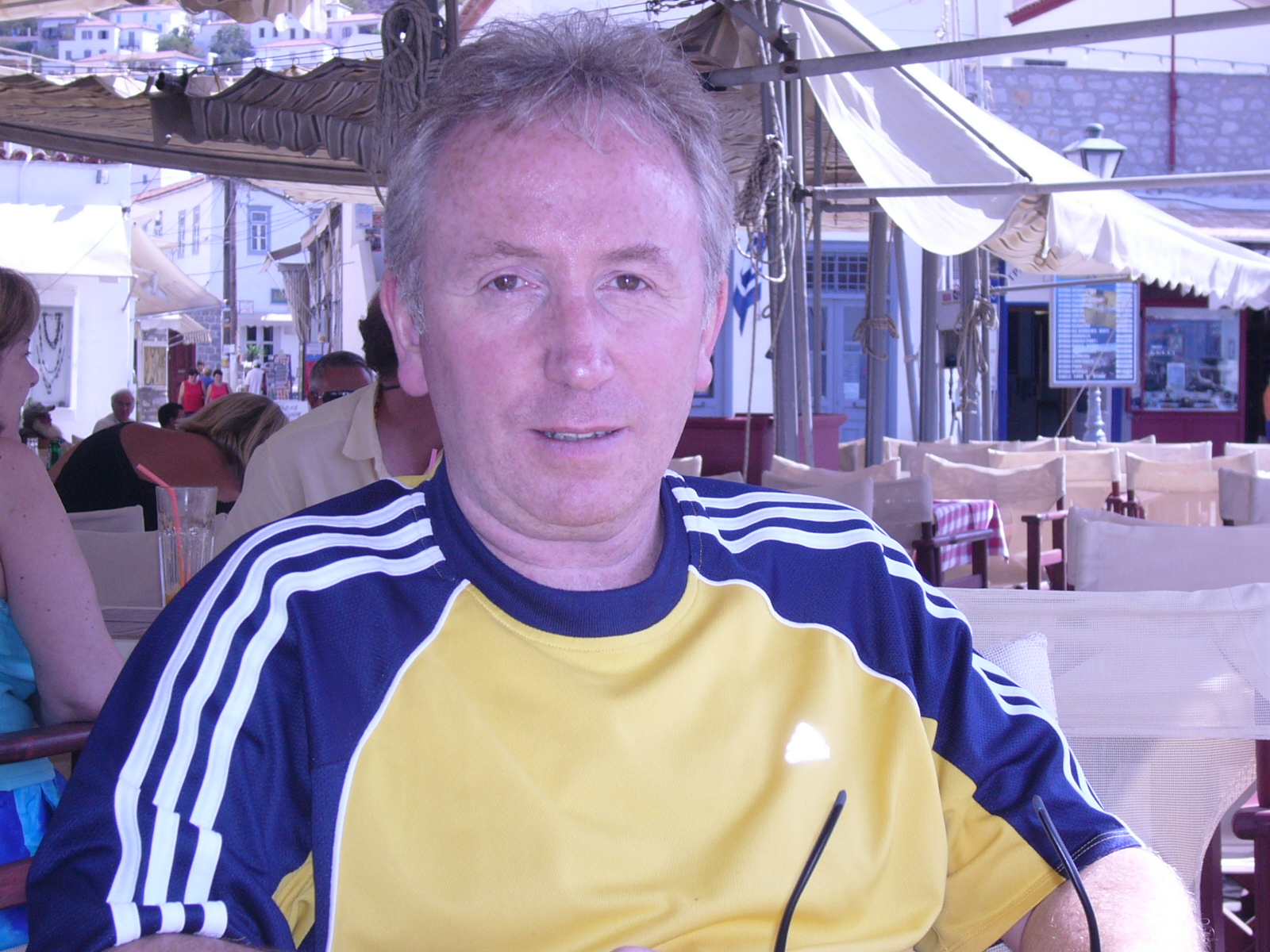
Here I discuss a little bit about my career falling into and out of things, and why I focus on a strengths perspective in my own work. Nicola is also interested in business success and money success tips, though why ask me about such things I have no idea… certainly not because I am coming to you weekly from a sun-drenched tax haven in a particularly exotic part of the world (don’t be fooled by the background in the picture above!).
Click on the following links to hear the full interview:
Dave is a reported case example (not interview) of someone advancing in age and who is not only coming to terms with complex health problems, but is also adamant about exerting his own views of what a plan for his life should look like when in contact with health care professionals.
Dave has recently lost his wife in a road traffic accident, and his children are concerned about his care needs as he is now diagnosed with Alzheimers disease. Dave puts his strengths to work, using skills he has developed over many years as a financial advisor, as well as his passion for reading up about his condition and the way services should work for him, not making him fit into a standard bureaucratic process. He challenges his local services to be genuinely person-centred and flexible in the way they meet with him, listen to him, and document his wishes. He also makes it very clear that he will not become a token gesture to service user involvement by refusing an invitation to join a local strategic committee.
To access the full content of this episode click on the links to iTunes and Sound Cloud (or go to Stitcher Radio):
One of the main challenges of the widely recognised ageing population is how we tap into the deep well of resources in older people, as well as identifying more resources in order to support older people with specific needs.
This episode will explore the idea of ‘care capital’ from the perspective of contributing through voluntary work. An emphais is placed on the baby boomer generation, with a wealth of skills and talents alongside a desire to contribute something back into society.
What do others gain from our charitable contributions? The flip side of that coin is that we also gain enormously from making contributions of time and effort; not least the protective factors that come from structured physical and psychological activity. There are a multitude of opportunities in local communities, but our more flexible way of thinking about work should also be reflected in more flexible ways in which we may be able to shape our voluntary contributions, so that we tap into the strengths of the many. A good neighbour befriending scheme is identified as one personal example.
For the full content of this episode click on the links to iTunes and Sound Cloud (or go to Stitcher Radio):

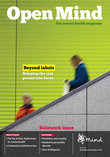 Open Mind was a fabulous social care focused magazine for which I published a number of articles between 2000-2012. The following article was first published in OpenMind 126, Mar/Apr 2004) and was reproduced with their kind permission on my website at Practice Based Evidence.

 The Strengths Revolution